avascular necrosis treatment without surgery
Can Avascular Necrosis Be Treated Without Surgery?
Introduction
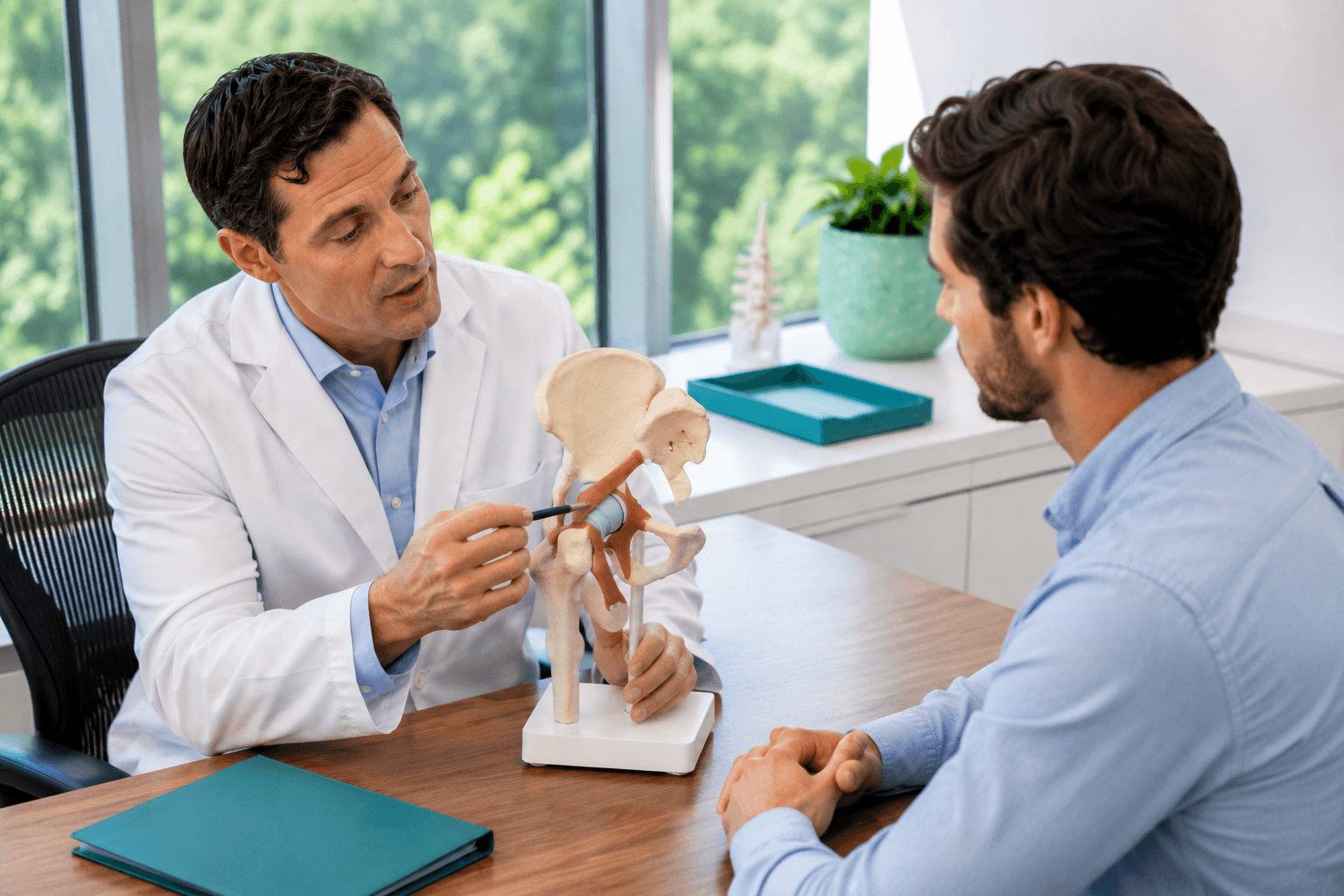
A diagnosis of avascular necrosis can immediately raise concerns about surgery, particularly when the condition affects the hip. However, surgery is not necessarily the first treatment for every patient. In earlier stages, when the femoral head has not significantly collapsed, nonsurgical strategies may be considered to manage symptoms, reduce stress on the joint, and maintain mobility.
At Dr. Hunter Orthopedic Surgery, treatment decisions consider the stage of avascular necrosis, the amount of bone involved, symptoms, imaging findings, joint condition, overall health, and the patient's functional goals. Whether avascular necrosis treatment without surgery is appropriate depends heavily on how far the condition has progressed.
The important distinction is between managing symptoms and reversing the underlying problem. Conservative treatments may help certain patients remain comfortable and functional, but avascular necrosis can continue progressing because the condition involves compromised blood supply and damage to bone tissue.
TLDR – Quick Guide
- Avascular necrosis may sometimes be managed without surgery during its earlier stages.
- Nonsurgical treatment primarily focuses on symptom control, joint protection, and maintaining function.
- Activity modification can reduce stress placed on the affected femoral head.
- Physical therapy may help maintain strength, mobility, and movement quality.
- Medication may be considered for pain management when medically appropriate.
- Conservative treatment cannot reliably reverse bone that has already been damaged by loss of blood supply.
- Regular monitoring is important because AVN may progress despite manageable symptoms.
- Once significant femoral head collapse or advanced arthritis develops, surgical treatment may become more appropriate.
- Learn more about Avascular Necrosis of the Hip and how the condition affects the joint.
What Is Avascular Necrosis?
Understanding Why the Bone Becomes Damaged
Avascular necrosis, also called osteonecrosis, develops when blood flow to an area of bone becomes inadequate. In the hip, it commonly affects the femoral head—the rounded upper portion of the thighbone that fits inside the hip socket.
Bone is living tissue that depends on a healthy blood supply. When circulation is disrupted, affected bone tissue can weaken and deteriorate.
During early stages, the femoral head may still maintain its rounded shape. If the condition progresses, however, weakened bone can eventually collapse. This changes the mechanics of the joint and can contribute to cartilage deterioration and secondary arthritis.
That progression is one reason the stage of AVN is so important when determining whether nonsurgical treatment remains appropriate.
Can Avascular Necrosis Really Be Treated Without Surgery?
It Depends on What Treatment Is Expected to Accomplish
Yes, some patients may initially receive avascular necrosis treatment without surgery. However, it is important to understand what conservative care can and cannot accomplish.
Nonsurgical treatment may help decrease pain, maintain mobility, strengthen the muscles supporting the hip, and reduce unnecessary stress on the affected joint. These improvements can be meaningful, particularly when symptoms are relatively mild.
Conservative treatment does not necessarily restore the compromised blood supply or reverse structural bone damage that has already occurred.
For this reason, nonsurgical care often needs to be combined with careful monitoring to determine whether the condition remains stable or continues progressing.
Why Does the Stage of AVN Matter?
Earlier Disease Offers Different Options
Treatment options can change substantially as avascular necrosis progresses.
In early AVN, changes may be occurring inside the femoral head without obvious collapse of its outer surface. At this point, conservative management may be considered depending on symptoms and imaging findings.
As the bone weakens, the femoral head can begin losing its normal shape. Once significant collapse develops, the joint surface may become increasingly irregular and cartilage can deteriorate.
At advanced stages, symptom management alone may no longer provide adequate function or comfort.
Identifying the stage of disease helps patients and their orthopedic surgeon determine whether continued nonsurgical treatment remains reasonable.
How Can Activity Modification Help?
Reduce Unnecessary Stress on the Hip
The hip experiences substantial forces during walking, running, jumping, lifting, and other weight-bearing activities.
When AVN has weakened the femoral head, reducing activities that consistently aggravate symptoms may help decrease discomfort and avoid unnecessary stress on the joint. High-impact exercise may need to be temporarily modified depending on the extent of disease.
For some patients, lower-impact activities may provide a way to maintain cardiovascular fitness and general conditioning without repeatedly provoking hip symptoms.
Activity modification should not necessarily mean complete inactivity. The objective is to maintain appropriate movement while avoiding loads that exceed what the affected hip can comfortably tolerate.
Can Crutches or a Cane Help?
Temporary Support May Reduce Joint Loading
Assistive devices may sometimes be recommended to decrease the amount of force placed through the affected hip.
A cane, crutches, or another walking aid can provide additional support when weight-bearing produces substantial discomfort. The appropriate device depends on symptoms, balance, strength, and the severity of the condition.
These devices do not treat the underlying loss of blood supply, but they may help patients remain mobile while reducing stress on the joint.
Patients should receive guidance on proper use because incorrect technique can create compensatory movement patterns or place unnecessary stress on other joints.
Does Physical Therapy Help Avascular Necrosis?
Rehabilitation Can Support Function
Physical therapy may be useful for maintaining strength, mobility, balance, and movement quality.
When hip pain causes patients to reduce activity, muscles around the hip can gradually weaken. This weakness may make everyday activities more difficult and contribute to compensatory movement.
A rehabilitation program can focus on strengthening the muscles around the hip and pelvis while maintaining comfortable range of motion. Exercise selection should reflect the patient's symptoms and the amount of weight-bearing considered appropriate.
Physical therapy cannot restore dead bone tissue or reverse femoral head collapse. Its primary role is supporting mobility and function as part of the overall treatment plan.
Can Medication Treat Avascular Necrosis?
Medication Primarily Addresses Symptoms
Medication may sometimes be recommended to help control discomfort associated with AVN.
Depending on a patient's medical history and other health factors, a healthcare professional may recommend appropriate pain-relieving or anti-inflammatory medications. Reducing discomfort may help patients remain appropriately active and participate more comfortably in rehabilitation.
However, symptom relief should not be confused with resolution of the underlying condition.
A patient may experience less pain while structural changes continue inside the femoral head. Continued orthopedic monitoring may therefore remain important even when medications provide meaningful relief.
Can Lifestyle Changes Make a Difference?
Overall Health Can Be Part of the Treatment Strategy
Certain health and lifestyle factors may be relevant when managing avascular necrosis.
Patients should discuss potentially contributing factors with their healthcare team and follow recommendations related to overall health. When a modifiable risk factor is identified, addressing it may become part of the broader management strategy.
Maintaining a healthy body weight may also reduce unnecessary mechanical stress across a painful hip, while appropriate physical activity can help preserve strength and general conditioning.
Lifestyle measures should complement orthopedic treatment rather than replace evaluation and monitoring of the affected bone.
Why Monitoring Is Essential During Nonsurgical Treatment
Less Pain Does Not Always Mean the Bone Is Stable
One of the most important aspects of avascular necrosis treatment without surgery is continued monitoring.
Symptoms do not always perfectly reflect what is happening structurally inside the hip. A patient may have manageable pain while imaging demonstrates changes within the femoral head.
Follow-up evaluation allows the orthopedic surgeon to assess symptoms, function, and imaging findings when appropriate.
The goal is to recognize meaningful progression before extensive collapse and joint deterioration occur. If the condition changes, the treatment strategy can be reconsidered rather than continuing conservative management indefinitely.
How Can AVN Lead to Hip Arthritis?
Structural Collapse Can Damage the Joint
When the femoral head begins to collapse, its normally smooth, rounded surface can become irregular.
This altered shape changes how the femoral head interacts with the hip socket. As joint mechanics deteriorate, cartilage can experience increasing damage and arthritis may develop.
Patients can learn more about degenerative joint changes through Dr. Hunter's Hip Arthritis resource.
The presence of substantial arthritis is important because it can change the purpose of treatment. Instead of attempting primarily to preserve the natural joint, treatment may eventually need to address widespread joint deterioration.
When Does Nonsurgical Treatment Become Less Appropriate?
Progression Can Shift the Treatment Strategy
Conservative treatment may become less effective when AVN produces substantial structural damage.
Increasing pain, progressive loss of motion, difficulty walking, declining ability to perform everyday activities, or evidence of femoral head collapse can indicate that the current strategy needs to be reconsidered.
The presence of advanced arthritis can further limit what symptom-based treatment can accomplish.
This does not mean every patient experiencing progression immediately needs joint replacement. Rather, it means that additional surgical options should be evaluated according to the stage of disease and overall condition of the hip.
Are There Surgical Options Before Hip Replacement?
Treatment Depends on Whether the Joint Can Still Be Preserved
When AVN progresses despite conservative treatment, surgery does not automatically mean total hip replacement.
For selected patients with earlier-stage disease, procedures intended to preserve the natural hip may be considered. Whether these approaches are appropriate depends on factors such as the extent and location of bone damage, whether collapse has occurred, patient age, symptoms, and overall joint condition.
The opportunities for joint preservation generally become more limited as structural deterioration progresses.
This is another reason early diagnosis and ongoing monitoring can be valuable: treatment options available before collapse may differ substantially from those available after advanced joint destruction.
When Is Hip Replacement Considered?
Advanced Joint Damage May Require Reconstruction
When avascular necrosis results in substantial collapse of the femoral head and advanced joint deterioration, Hip Replacement Surgery may become an appropriate treatment option.
Hip replacement addresses the damaged joint surfaces by replacing them with prosthetic components. It is generally considered when pain and loss of function have become significant and other treatment strategies are unlikely to provide adequate long-term relief.
The decision should consider symptoms and functional limitations alongside imaging findings.
Patients considering more extensive reconstructive treatment can also review What to Expect From Joint Reconstruction Surgery to better understand surgical planning and recovery.
Does Having AVN Mean Hip Replacement Is Inevitable?
Not Every Patient Follows the Same Path
A diagnosis of avascular necrosis does not automatically mean a patient will require hip replacement.
The extent of disease, location of bone involvement, progression rate, underlying cause, age, symptoms, and joint condition can differ substantially between individuals.
Patients diagnosed before structural collapse may have different treatment opportunities than those diagnosed after advanced joint deterioration has developed.
Rather than assuming a predetermined outcome, patients benefit from understanding their specific stage of disease and monitoring how the hip changes over time.
When Should You See an Orthopedic Specialist?
Early Evaluation Can Preserve Treatment Choices
Persistent groin or hip pain deserves evaluation, particularly when symptoms worsen during weight-bearing or begin interfering with normal activity.
Patients already diagnosed with Avascular Necrosis of the Hip should maintain recommended follow-up appointments even if symptoms remain relatively manageable.
Increasing pain, stiffness, limping, difficulty bearing weight, or declining mobility may indicate progression.
Earlier evaluation can help establish the stage of disease and determine whether continued conservative care, a hip-preserving procedure, or another treatment strategy is appropriate.
Key Takeaways
- Avascular necrosis treatment without surgery may be considered for selected patients, particularly during earlier stages.
- Nonsurgical treatment focuses primarily on symptom management, joint protection, mobility, and function.
- Activity modification may reduce unnecessary stress on the affected femoral head.
- Assistive devices can sometimes reduce painful weight-bearing.
- Physical therapy can help maintain strength and mobility but cannot reverse damaged bone.
- Medication may control symptoms without correcting the underlying loss of blood supply.
- Improvement in pain does not necessarily mean AVN has stopped progressing.
- Regular orthopedic monitoring is important during conservative treatment.
- Femoral head collapse can eventually contribute to cartilage deterioration and hip arthritis.
- Surgical options depend significantly on whether substantial structural collapse has already occurred.
- Advanced joint damage may eventually make hip replacement a more appropriate treatment.
FAQs
Can avascular necrosis go away without surgery?
Avascular necrosis involves damage caused by inadequate blood supply to bone, so conservative treatment should not be assumed to reverse established bone damage. Nonsurgical strategies may help control symptoms and maintain function in selected patients, particularly during earlier disease. Continued monitoring is important because AVN can progress even when symptoms temporarily improve.
What is the best nonsurgical treatment for avascular necrosis?
There is no single nonsurgical treatment that is best for every patient with AVN. Management may include activity modification, appropriate pain management, assistive devices, physical therapy, and monitoring depending on the stage of disease and individual circumstances. An orthopedic evaluation can determine which combination is most appropriate for the specific hip.
Can physical therapy stop avascular necrosis from progressing?
Physical therapy can help maintain strength, mobility, balance, and functional movement, but it cannot reliably restore blood supply or reverse damaged bone. Rehabilitation may make everyday movement easier and help prevent unnecessary weakness associated with reduced activity. Structural progression should still be monitored by an orthopedic specialist when appropriate.
How do I know if my avascular necrosis is getting worse?
Increasing hip or groin pain, stiffness, limping, reduced range of motion, and greater difficulty with weight-bearing can indicate that the condition is becoming more symptomatic. However, symptoms alone may not reveal the full extent of structural progression within the femoral head. Follow-up examination and imaging can help determine whether collapse or additional joint damage is developing.
When does avascular necrosis require hip replacement?
Hip replacement may be considered when AVN has produced substantial femoral head collapse, advanced joint deterioration, persistent pain, and significant limitations in everyday function. At that stage, procedures intended to preserve the natural joint may offer less predictable benefit. The decision is individualized according to imaging findings, symptoms, mobility, overall health, and response to previous treatment.
Final Thoughts
Ready to discuss your hip or knee concerns with Dr. Hunter?