Hip replacement vs hip resurfacing
Hip Replacement vs Hip Resurfacing: Which Patients May Benefit Most
Introduction
Hip replacement vs hip resurfacing is a common comparison for patients exploring surgical options for advanced hip pain and joint damage. While both procedures are designed to relieve pain and restore function, they differ in technique, candidacy, and long-term considerations. Understanding how hip replacement vs hip resurfacing compare can help patients make informed decisions about their care.
AtDr. Michael Hunter, MD, surgical recommendations are based on anatomy, lifestyle, and long-term joint health rather than a one-size-fits-all approach. Knowing which patients may benefit most from hip replacement vs hip resurfacing starts with understanding how each procedure works.
TLDR – Quick Guide
- Hip replacement vs hip resurfacing differ in how much bone is preserved
- Hip replacement removes and replaces the damaged joint surfaces
- Hip resurfacing preserves more bone but is not suitable for everyone
- Patient anatomy, age, and activity level influence candidacy
- Personalized evaluation determines the best option
Detailed Breakdown
What Hip Replacement Involves
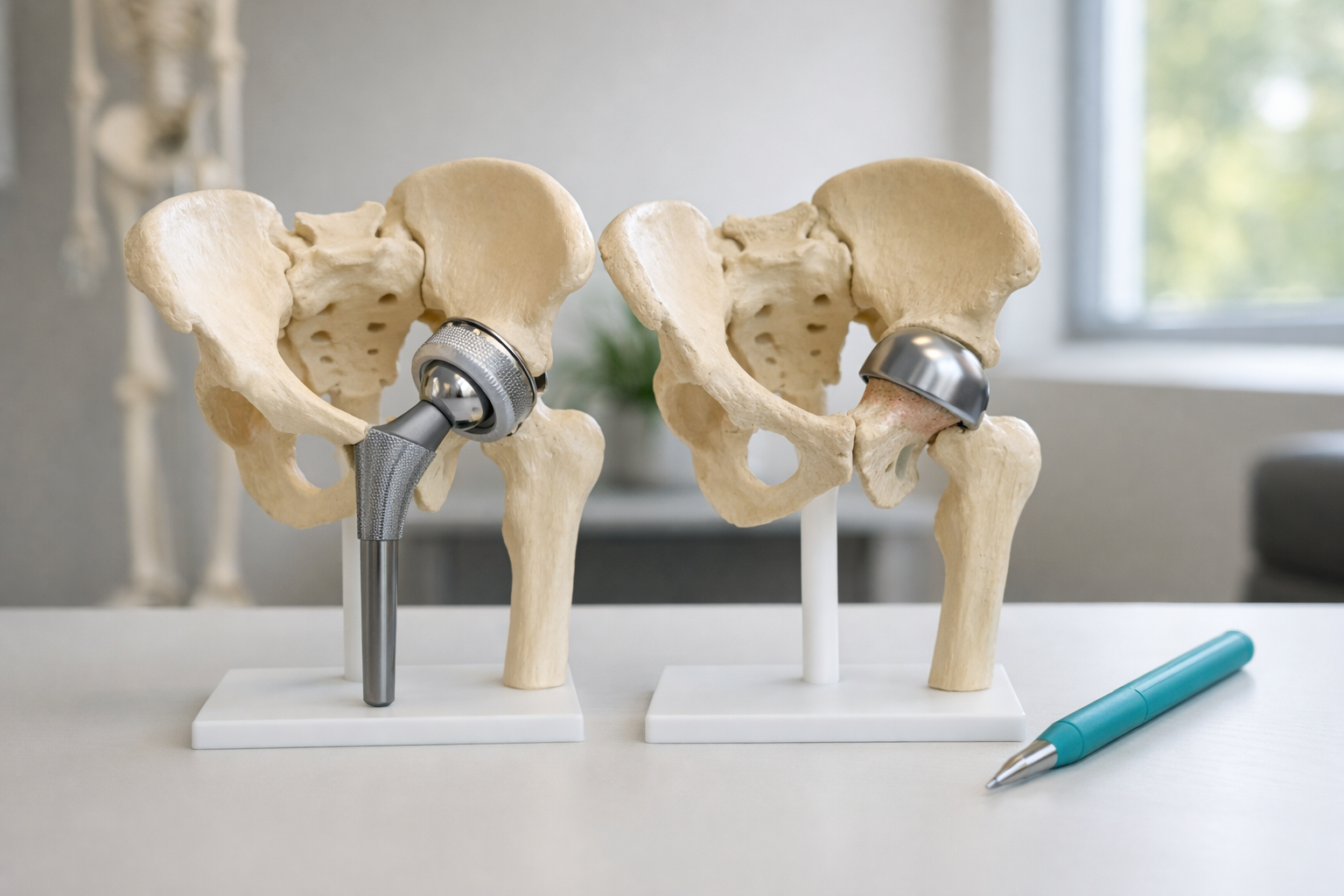
Hip replacement surgery removes the damaged ball and socket of the hip joint and replaces them with artificial components. This approach has a long track record of success and is widely used to treat advanced arthritis and joint degeneration.
Key features of hip replacement include:
- Removal of damaged joint surfaces
- Replacement with durable artificial components
- Proven long-term pain relief and mobility improvement
Hip replacement is a cornerstone of our hip replacement services and is suitable for a wide range of patients.
What Hip Resurfacing Involves
Hip resurfacing is a different surgical approach that preserves more of the patient’s natural bone. Instead of removing the entire femoral head, the damaged surface is reshaped and capped with a metal covering.
Key characteristics of hip resurfacing include:
- Preservation of more bone in the femur
- A metal cap placed over the femoral head
- A socket component similar to hip replacement
Because of these differences, hip resurfacing is offered only to select patients who meet specific criteria.
Key Differences in Hip Replacement vs Hip Resurfacing
When comparing hip replacement vs hip resurfacing, the primary distinction lies in bone preservation and implant design. Each option has advantages and limitations depending on patient factors.
Important differences include:
- Hip replacement removes more bone but offers broad candidacy
- Hip resurfacing preserves bone but has stricter eligibility
- Implant materials and mechanics differ between procedures
Understanding these differences helps patients evaluate which option aligns best with their goals and anatomy.
Which Patients May Benefit More From Hip Replacement
Hip replacement is often recommended for patients with advanced arthritis, bone loss, or complex joint damage. It is also commonly chosen for individuals seeking predictable outcomes across a wide range of activity levels.
Patients who may benefit most from hip replacement include those with:
- Significant joint degeneration or deformity
- Reduced bone quality
- Symptoms that severely limit daily activities
Hip replacement is frequently discussed as part of comprehensive orthopedic services due to its reliability and versatility.
Which Patients May Be Considered for Hip Resurfacing
Hip resurfacing is typically reserved for a smaller subset of patients. Candidates are often younger, more active individuals with strong bone quality and specific joint characteristics.
Potential candidates may include:
- Patients with good bone density
- Individuals without significant deformity
- Those with anatomy suitable for resurfacing implants
Because of the narrower candidacy, careful evaluation is essential when considering hip replacement vs hip resurfacing.
Long-Term Considerations and Outcomes
Both hip replacement and hip resurfacing aim to relieve pain and restore mobility, but long-term planning is important. Implant longevity, activity expectations, and future revision risk are all considered during surgical planning.
Surgeons evaluate:
- Expected implant lifespan
- Activity demands over time
- Potential need for future procedures
These factors help guide patients toward the most appropriate option for long-term joint health.
Key Takeaways
- Hip replacement vs hip resurfacing differ primarily in bone preservation
- Hip replacement is suitable for a broader range of patients
- Hip resurfacing is limited to select candidates
- Anatomy, bone quality, and lifestyle influence the decision
- Personalized evaluation determines the best surgical approach
FAQs
What is the main difference in hip replacement vs hip resurfacing?
The main difference is how much bone is preserved. Hip replacement removes the damaged joint surfaces entirely. Hip resurfacing preserves more bone by reshaping and capping the femoral head.
Is hip resurfacing better than hip replacement?
Hip resurfacing is not better for everyone. It may benefit select patients with specific anatomy and bone quality. Hip replacement remains the most widely used and versatile option.
Who is not a good candidate for hip resurfacing?
Patients with poor bone quality, significant joint deformity, or certain medical conditions may not be candidates. Careful evaluation is required. Many patients are better suited for hip replacement.
Do hip replacement and hip resurfacing last the same amount of time?
Implant longevity varies by procedure, materials, and patient factors. Hip replacement has extensive long-term outcome data. Hip resurfacing durability depends heavily on patient selection.
How do surgeons decide between hip replacement vs hip resurfacing?
Surgeons assess anatomy, bone quality, age, activity level, and joint damage. Imaging and clinical evaluation guide the recommendation. The goal is long-term function and safety.
Ready to discuss your hip or knee concerns with Dr. Hunter?