Introduction
An MCL tear can temporarily sideline athletes from running, cutting, jumping, and contact sports, but many of these injuries can recover successfully without surgery. The challenge is knowing when the knee is actually ready for athletic demands rather than returning simply because pain has improved.
At Dr. Michael Hunter Orthopedic Surgery, decisions about when to return to sports after an MCL tear consider the severity of the injury, knee stability, strength, range of motion, associated injuries, rehabilitation progress, and demands of the athlete's sport. A mild sprain and a high-grade ligament tear do not follow the same recovery process.
Instead of relying on a calendar alone, athletes should progress through functional milestones that demonstrate the knee can safely tolerate increasingly demanding movement.
TLDR – Quick Guide
- MCL injuries range from mild sprains to complete ligament tears.
- Mild MCL injuries generally allow a faster return than high-grade tears.
- Many isolated MCL tears can be treated without surgery.
- Pain relief alone does not mean the knee is ready for sports.
- Athletes should regain knee motion, strength, stability, and movement control before returning.
- Running typically returns before cutting, pivoting, and contact activities.
- Sport-specific drills can help bridge the gap between rehabilitation and competition.
- Persistent instability, swelling, or pain should be evaluated before returning to play.
- Associated ACL, meniscus, or other knee injuries can significantly change the recovery plan.
- Sports Medicine can provide individualized rehabilitation and return-to-play guidance.
What Is an MCL Tear?
Understanding the Ligament on the Inside of the Knee
The medial collateral ligament, or MCL, runs along the inner side of the knee and helps resist forces that push the knee inward.
An MCL injury commonly occurs when a force strikes the outside of the knee or when the knee twists during athletic activity. Football, soccer, skiing, basketball, and other sports involving contact or rapid changes in direction can place the ligament at risk.
Symptoms may include:
- Pain along the inside of the knee
- Tenderness over the ligament
- Swelling
- Difficulty changing direction
- Pain with weight-bearing
- A sensation of instability
- Reduced confidence during athletic movements
Patients can learn more about symptoms and treatment through Dr. Hunter's MCL Injury resource.
How Are MCL Tears Graded?
Injury Severity Influences Recovery
MCL injuries are commonly described according to the amount of ligament damage and resulting instability.
A Grade 1 injury is generally a mild sprain in which the ligament has been stretched but remains functionally stable. A Grade 2 injury involves a partial tear and may produce more significant pain, tenderness, and looseness.
A Grade 3 injury represents a complete tear and can produce greater instability.
The grade provides useful information, but it is not the only factor determining when an athlete can return. Associated knee injuries, sport demands, rehabilitation progress, and individual healing also matter.
How Long Does an MCL Tear Take to Heal?
Recovery Timelines Vary by Severity
There is no single recovery timeline that applies to every MCL injury.
Mild sprains may improve sufficiently for athletic progression within a relatively short period, while partial or complete tears generally require more time for healing and rehabilitation. High-demand athletes may also need additional training before they are ready for unrestricted competition.
Instead of viewing a specific week as an automatic clearance date, recovery should be assessed through clinical and functional milestones.
The athlete needs to demonstrate that the knee can tolerate the demands of the sport without significant pain, instability, or recurring swelling.
Can an MCL Tear Heal Without Surgery?
Many Isolated MCL Injuries Are Treated Conservatively
The MCL has meaningful healing potential, and many isolated injuries can be treated without surgery.
Early treatment may involve temporary activity modification, swelling management, and bracing when appropriate. Rehabilitation then focuses on restoring movement, strength, stability, and confidence.
Surgery may be considered in selected situations, particularly when the injury is part of a more complex knee injury or when significant instability persists.
The treatment decision should therefore consider the entire knee rather than the MCL in isolation.
What Does Early MCL Rehabilitation Involve?
Protect the Ligament While Maintaining Function
During the early stage of recovery, the objective is to protect the healing ligament while preventing unnecessary loss of movement and strength.
Depending on injury severity, rehabilitation may initially focus on comfortable knee range of motion, muscle activation, and controlled weight-bearing. A brace may be recommended for certain injuries to provide additional support.
As pain and swelling improve, strengthening can gradually become more demanding.
Progressing too aggressively can irritate the healing knee, while prolonged inactivity can contribute to stiffness, weakness, and delayed functional recovery.
Why Is Strength Important Before Returning to Sports?
The Entire Lower Extremity Helps Control the Knee
Ligament healing alone does not guarantee athletic readiness.
The quadriceps, hamstrings, hip muscles, and other structures throughout the lower extremity contribute to controlling knee position during movement. Weakness can make running, landing, cutting, and decelerating less controlled.
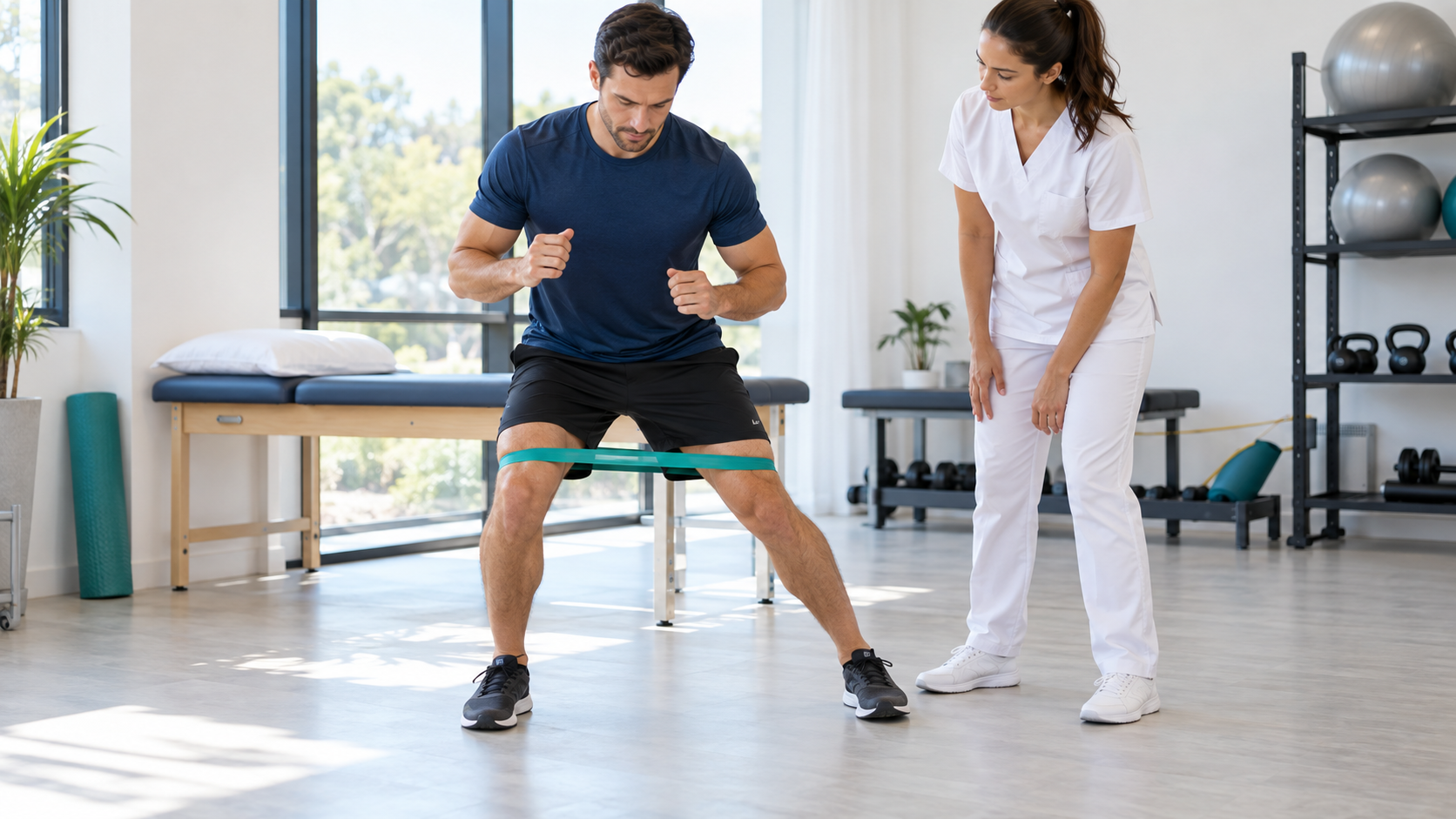
Rehabilitation therefore commonly includes exercises targeting more than the injured ligament.
An athlete preparing to return to sports should demonstrate adequate strength and control during movements that reflect the demands of the activity.
When Can You Start Running After an MCL Tear?
Straight-Line Running Usually Comes Before Cutting
Running is an important milestone, but it should generally begin only after basic knee function has returned sufficiently.
Before running, an athlete typically needs comfortable walking, appropriate range of motion, adequate strength, and a knee that does not develop significant swelling with lower-level exercise.
The progression may begin with controlled straight-line jogging before advancing in speed and duration.
Patients returning to endurance activities may find additional recovery principles in Returning to Running and Cycling After Surgery. Although postoperative recovery differs from an isolated MCL injury, gradual progression based on function remains important.
When Can You Start Cutting and Pivoting?
Direction Changes Place Greater Stress on the Knee
Cutting, pivoting, and rapid changes in direction place greater demands on knee stability than straight-line running.
These movements should generally return later in rehabilitation after strength, balance, and basic running tolerance have been restored.
Athletes may progress through controlled lateral movement, planned changes of direction, acceleration and deceleration drills, and eventually more reactive movements.
If medial knee pain, instability, or swelling repeatedly returns during these exercises, the athlete may not yet be ready for unrestricted sport.
When Can You Return to Contact Sports?
Contact Adds Another Level of Demand
Returning to football, soccer, basketball, hockey, or another contact activity requires the knee to tolerate both athletic movement and unpredictable external forces.
An athlete should be able to run, jump, land, cut, accelerate, and decelerate confidently before unrestricted contact is considered.
Sport-specific practice may be introduced gradually before full competition.
In selected cases, an orthopedic specialist may recommend temporary bracing during the transition back to sports depending on the injury and activity.
What Are the Key Return-to-Sport Milestones?
Function Matters More Than the Calendar
Before returning to unrestricted sports, an athlete should demonstrate meaningful recovery across several areas.
Important milestones may include:
- Minimal or no significant pain during activity
- No problematic recurring swelling
- Full or near-full functional knee motion
- Appropriate knee stability
- Restored lower-extremity strength
- Good balance and neuromuscular control
- Ability to run without symptoms
- Controlled jumping and landing
- Ability to accelerate and decelerate
- Comfortable cutting and changing direction
- Completion of sport-specific drills
- Confidence using the injured knee
The exact criteria should be individualized to the athlete and sport.
Why Does Swelling Matter During Recovery?
Swelling Can Indicate the Knee Is Being Overloaded
A knee that repeatedly swells after exercise may be signaling that the current workload exceeds what it can comfortably tolerate.
Some symptoms can occur as activity increases, but persistent or increasing swelling should not simply be ignored. It may indicate ongoing irritation or another problem within the knee.
Athletes should pay attention to how the knee responds during activity and afterward.
A successful return-to-sport progression should allow increasing workloads without repeatedly producing substantial pain or swelling.
What If the Knee Still Feels Unstable?
Instability Should Be Evaluated Before Competition
An athlete who continues feeling that the knee shifts, buckles, or gives way should not assume the MCL simply needs more time.
Persistent instability may indicate incomplete recovery or another associated knee injury. Ligaments such as the ACL, along with the menisci and other structures, can sometimes be injured during the same traumatic event.
A comprehensive orthopedic evaluation can help determine why instability remains.
Returning to pivoting or contact sports with unresolved instability may interfere with performance and expose the knee to additional injury.
Can an MCL Tear Occur With a Meniscus or ACL Injury?
Combined Injuries Can Change the Timeline
Yes. The force responsible for an MCL tear can sometimes damage additional structures inside the knee.
When an ACL injury, meniscus tear, cartilage injury, or another ligament injury occurs at the same time, treatment and return-to-sport planning can become more complicated.
Combined injuries may require additional imaging, rehabilitation, or surgical treatment depending on their severity.
In selected cases where intra-articular knee problems require surgical treatment, Arthroscopy may be part of the treatment strategy. Arthroscopy is not routinely required simply because the MCL itself is injured.
Does Returning Too Early Increase the Risk of Problems?
Symptoms May Improve Before Athletic Function Returns
Athletes are often eager to return once everyday walking becomes comfortable and pain decreases.
However, sports place much greater forces on the knee than routine daily activity. Sprinting, jumping, landing, cutting, and responding to unpredictable opponents require strength and neuromuscular control that may not yet have fully returned.
Returning before these abilities have been rebuilt can result in poor movement quality, recurring symptoms, and difficulty performing confidently.
A gradual return allows the athlete to identify limitations before full competition.
How Can Athletes Reduce the Risk of Another Injury?
Maintain Strength and Manage Training Loads
Injury prevention continues after formal rehabilitation ends.
Athletes should maintain lower-extremity strength, movement control, balance, and sport-specific conditioning. Training volume and intensity should also increase progressively rather than jumping immediately from rehabilitation to full competition.
Adequate recovery between demanding sessions can help the body adapt to increasing workloads.
The principles discussed in Preventing Overuse Sports Injuries can also help athletes think more carefully about training progression, recovery, and avoiding sudden workload increases.
When Should You See a Sports Medicine Specialist?
Persistent Symptoms Deserve Further Evaluation
Athletes should seek evaluation when knee symptoms are severe, fail to improve, or repeatedly return during rehabilitation.
Orthopedic assessment may be particularly helpful when there is persistent instability, substantial swelling, difficulty fully bending or straightening the knee, inability to progress through rehabilitation, or uncertainty about associated injuries.
A Sports Medicine evaluation can also help athletes establish sport-specific criteria for returning safely.
The goal is not simply to return as quickly as possible but to return when the knee can meet the demands of the activity.
Key Takeaways
- The timeline to return to sports after an MCL tear depends on injury severity, stability, rehabilitation progress, and sport demands.
- Mild MCL sprains generally recover faster than partial or complete tears.
- Many isolated MCL injuries can heal successfully without surgery.
- Pain relief alone is not enough to determine athletic readiness.
- Strength, range of motion, stability, balance, and movement control should be restored before unrestricted competition.
- Straight-line running usually returns before cutting, pivoting, and contact activity.
- Sport-specific drills can help determine whether the knee is prepared for competition.
- Recurring swelling or instability may indicate that the athlete is progressing too quickly or has another knee problem.
- Combined MCL, ACL, meniscus, or cartilage injuries can significantly alter the recovery plan.
- A criteria-based return is generally more useful than relying on a specific date alone.
FAQs
How long after an MCL tear can I return to sports?
The timeline depends on whether the injury is a mild sprain, partial tear, or complete tear and whether other knee structures were also injured. Athletes with lower-grade isolated injuries generally progress faster than those with more severe or combined injuries. Return to play should ultimately depend on knee stability, strength, motion, symptoms, and sport-specific function rather than time alone.
Can I run with a healing MCL tear?
Running may be introduced once walking is comfortable and the knee has sufficient motion, strength, stability, and tolerance for lower-level exercise. Straight-line jogging typically places fewer rotational demands on the knee than cutting or pivoting sports. Running should be progressed gradually, and recurring pain or swelling should be discussed with the treating healthcare professional.
Do MCL tears usually require surgery?
Many isolated MCL tears can heal successfully with nonsurgical treatment because the ligament has meaningful healing potential. Treatment may include activity modification, bracing when appropriate, and progressive rehabilitation. Surgery may be considered in selected complex injuries, particularly when other structures are damaged or significant instability persists.
How do I know if my MCL is ready for sports?
The knee should demonstrate appropriate stability, functional range of motion, strength, balance, and control during movements required by the sport. Athletes should also be able to progress through running, jumping, landing, cutting, and sport-specific drills without problematic pain, swelling, or instability. A sports medicine professional can assess these factors before unrestricted competition.
Can I reinjure my MCL if I return too soon?
Returning before adequate healing and functional recovery may leave the knee less prepared for the forces encountered during sports. Reduced strength, poor movement control, or persistent instability can make high-demand activity more difficult to tolerate safely. Completing rehabilitation and progressing through sport-specific milestones can help prepare the knee for a more controlled return.
Ready to discuss your hip or knee concerns with Dr. Hunter?