sports injury not healing
Why Your Sports Injury Is Not Healing and When to See an Orthopedic Specialist
Introduction
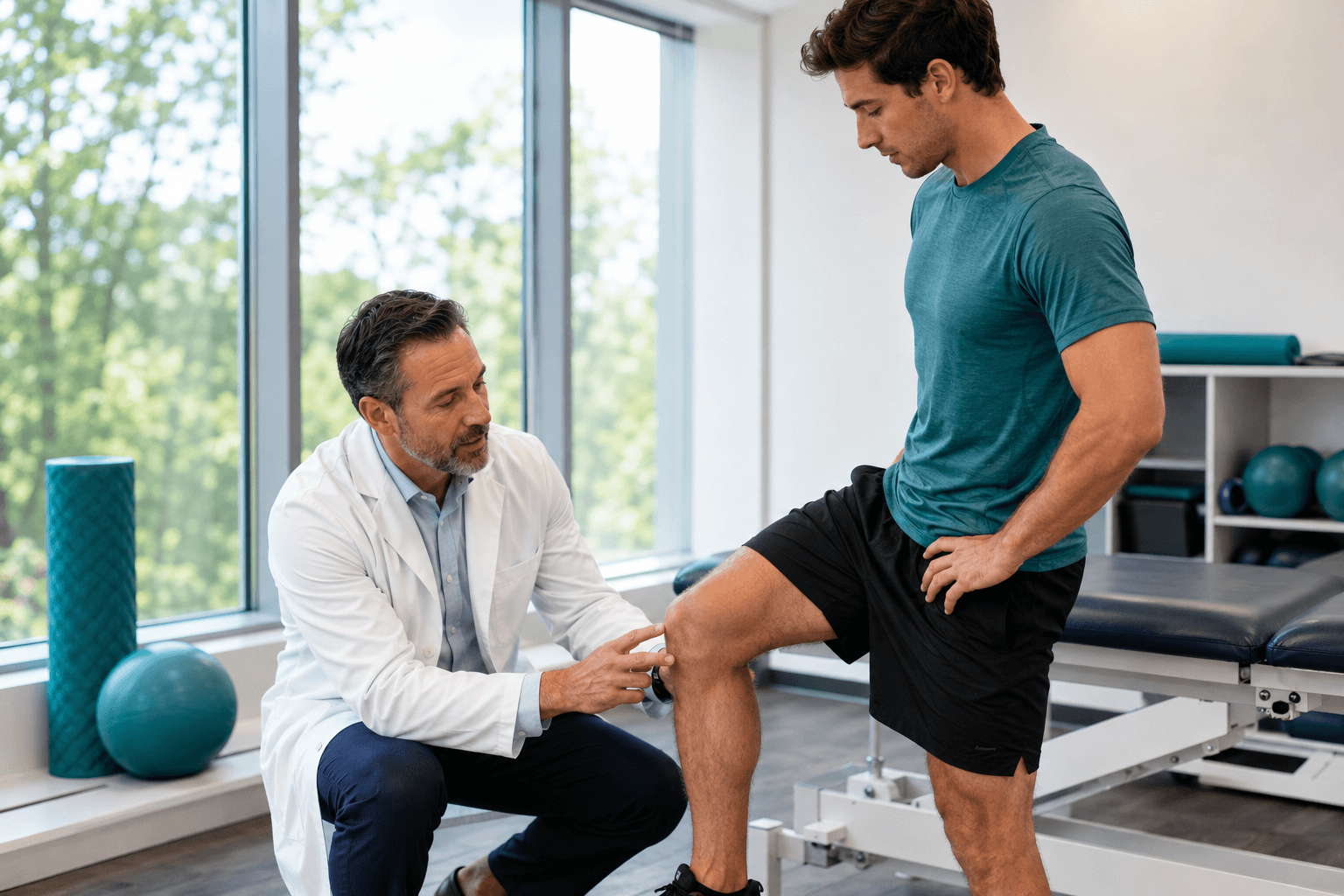
Most athletes expect soreness after intense exercise or a minor injury. With appropriate rest and recovery, those symptoms often improve. But when pain, swelling, weakness, or instability continues for weeks—or returns every time you resume activity—it may indicate that the injury is more significant than initially thought.
A sports injury not healing as expected can have several explanations. The original diagnosis may be incomplete, the injured tissue may need more time to recover, rehabilitation may not adequately address the problem, or returning to activity too quickly may repeatedly aggravate the area.
At Dr. Hunter Orthopedic Surgery, sports injuries are evaluated based on symptoms, physical examination findings, activity demands, and appropriate imaging when necessary. Identifying why an injury continues to cause problems is an important step toward developing a treatment plan that supports both recovery and a safe return to activity.
TLDR – Quick Guide
- Persistent pain does not always mean you simply need more rest.
- An inaccurate or incomplete initial diagnosis can delay recovery.
- Returning to sports too quickly may repeatedly aggravate healing tissue.
- Weakness, poor mobility, or movement problems can contribute to recurring symptoms.
- Swelling, instability, locking, or repeated giving way deserve orthopedic evaluation.
- ACL and meniscus injuries can cause persistent knee symptoms that may not resolve with rest alone.
- Arthroscopy may be considered for certain structural joint problems when appropriate.
- Sports Medicine can help identify the cause of persistent symptoms and guide a structured return to activity.
How Long Should a Sports Injury Take to Heal?
Recovery Depends on What Was Actually Injured
There is no universal recovery timeline for sports injuries. A mild muscle strain may improve relatively quickly, while injuries involving ligaments, cartilage, tendons, or bones can require considerably longer rehabilitation.
The severity of the injury also matters. Two athletes with pain in the same area may have completely different underlying problems and therefore require different treatment plans.
Instead of focusing only on how many days or weeks have passed, look at whether symptoms and function are steadily improving. Decreasing pain, improving strength, better mobility, and an increasing ability to tolerate activity generally indicate that recovery is moving in the right direction.
When improvement stalls or symptoms repeatedly return, further evaluation may be appropriate.
Why Is Your Sports Injury Not Healing?
Persistent Symptoms Can Have Several Causes
A sports injury may fail to improve for reasons beyond simply needing additional rest.
One possibility is that the original injury was more significant than initially suspected. What seems like a minor sprain or strain can sometimes involve damage to a ligament, meniscus, tendon, cartilage, or another structure.
Recovery can also stall when the injured area remains weak or lacks adequate mobility. Even after pain decreases, deficits in strength and movement control may continue placing excessive stress on the recovering tissue.
Other patients return to training before the injured structure has regained enough capacity to tolerate their previous workload. Symptoms then improve during rest but return as soon as exercise resumes.
Did You Return to Activity Too Quickly?
Feeling Better Is Not the Same as Being Fully Recovered
Pain reduction is an important milestone, but it does not necessarily mean an injury has completely healed.
Athletes often return to running, lifting, cutting, jumping, or competition as soon as everyday activities become comfortable. The problem is that sports typically place much greater forces on the body than walking around the house or performing routine daily tasks.
A safer return requires gradually rebuilding the strength, endurance, mobility, and movement control needed for the specific sport.
If symptoms consistently return after increasing training intensity, your body may be signaling that the injured area is not yet prepared for those demands.
Could Your Initial Diagnosis Have Missed Something?
Similar Symptoms Can Come From Different Injuries
Sports injuries can be difficult to identify based on pain location alone.
Knee pain after a twisting injury, for example, might involve a ligament, meniscus, cartilage, bone, or several structures at the same time. Shoulder, hip, and ankle symptoms can be similarly complex.
An orthopedic evaluation may include a detailed history, physical examination, and imaging when appropriate. These pieces of information help determine whether the initial diagnosis accurately explains the patient's ongoing symptoms.
Persistent symptoms deserve reassessment rather than repeatedly treating an assumed injury that may not represent the entire problem.
Why Rehabilitation Matters
Rest Alone May Not Restore Athletic Function
Rest can reduce irritation, but it does not automatically restore strength, balance, mobility, or sport-specific movement.
A comprehensive rehabilitation program progressively rebuilds the physical qualities needed to tolerate athletic activity. Depending on the injury, this may include strengthening, flexibility work, balance training, movement retraining, and gradual exposure to higher physical demands.
Rehabilitation should also address the factors that may have contributed to the injury or could increase the likelihood of recurrence.
For athletes struggling with persistent symptoms, Sports Medicine for Sports Injuries in Orange County provides additional insight into how specialized orthopedic care can support diagnosis, rehabilitation, and return-to-sport planning.
When Persistent Knee Pain Could Be an ACL Injury
Instability Is an Important Warning Sign
An ACL injury can occur during sudden changes in direction, awkward landings, twisting movements, or direct trauma to the knee.
Some athletes immediately recognize that a significant injury has occurred, while others initially believe they have experienced a less serious knee sprain. Persistent instability, swelling, difficulty changing direction, or repeated episodes of the knee giving way may indicate that further evaluation is necessary.
An ACL Injury requires an individualized treatment approach based on the severity of the injury, knee stability, associated damage, and the patient's desired activity level.
Returning to pivoting or cutting sports without adequate knee stability can place additional stress on the joint.
Could a Meniscus Tear Be Causing Persistent Symptoms?
Mechanical Knee Symptoms Should Not Be Ignored
The meniscus is cartilage within the knee that helps distribute forces and contributes to joint function. Tears can occur following twisting injuries or develop gradually through repetitive stress and degeneration.
A Meniscus Tear may cause pain, swelling, stiffness, catching, or difficulty fully moving the knee. Some patients also describe locking sensations or discomfort when squatting and twisting.
Not every meniscal tear requires surgery. Treatment depends on factors such as the tear pattern, symptoms, activity demands, age, associated injuries, and whether conservative treatment is improving function.
Persistent mechanical symptoms should be evaluated rather than repeatedly ignored during training.
What Does Recurring Swelling Mean?
Swelling Can Signal Ongoing Joint Irritation
Swelling that repeatedly develops after exercise may indicate that the injured area is not tolerating the current level of activity.
A joint that appears relatively normal in the morning but becomes noticeably swollen after running, practice, or competition may still be irritated. Increasing training volume despite recurring swelling can make it more difficult to determine whether recovery is actually progressing.
The underlying cause can vary considerably depending on the joint and injury.
If swelling repeatedly returns, particularly when accompanied by pain, stiffness, instability, or reduced range of motion, an orthopedic evaluation can help identify what is driving the reaction.
Why Weakness Can Keep an Injury From Improving
The Entire Movement Chain Matters
Sports performance depends on multiple muscle groups and joints working together.
After an injury, athletes often compensate without realizing it. A painful knee may change walking or running mechanics, while a hip injury may alter how forces travel through the leg.
These compensations can persist even after the original pain begins improving.
Rehabilitation should therefore focus on more than the exact location of discomfort. Restoring strength and movement throughout the surrounding kinetic chain can help reduce unnecessary stress on the recovering area and prepare the body for higher-level activity.
When Should You See an Orthopedic Specialist?
Know the Warning Signs
Minor soreness that steadily improves may not require specialized orthopedic treatment. Persistent or worsening symptoms are different.
Consider an orthopedic evaluation when you experience:
- Pain that is not steadily improving
- Repeated swelling after activity
- Difficulty bearing weight
- Loss of strength or mobility
- Catching or locking within a joint
- Repeated giving way or instability
- Pain that returns whenever training resumes
- Symptoms interfering with everyday activities
- Inability to return to your previous activity level
- A significant traumatic injury followed by persistent symptoms
These signs do not automatically mean surgery is necessary. They indicate that determining the underlying cause of the problem may be more appropriate than continuing to wait for it to resolve on its own.
Does a Sports Injury That Is Not Healing Require Surgery?
Many Persistent Injuries Can Still Be Treated Conservatively
Persistent symptoms do not automatically mean an operation is required.
Depending on the diagnosis, treatment may include activity modification, physical therapy, progressive strengthening, medication when appropriate, or other nonsurgical strategies. The objective is to address the actual source of symptoms rather than simply reducing activity indefinitely.
Surgery may enter the discussion when significant structural damage is present, symptoms continue despite appropriate conservative treatment, or the injury creates instability or mechanical problems that interfere with function.
The decision should be individualized around the specific injury and the patient's goals.
When Is Arthroscopy Considered?
Certain Joint Problems May Benefit From Minimally Invasive Treatment
Arthroscopy is a minimally invasive surgical technique that allows an orthopedic surgeon to evaluate and treat certain problems inside a joint through small incisions.
For selected knee and hip conditions, Knee Arthroscopy may be considered when structural damage continues causing significant symptoms despite appropriate nonsurgical treatment.
Whether arthroscopy is appropriate depends on the diagnosis, symptoms, imaging findings, joint health, and response to previous care.
It should not be viewed as the automatic next step simply because an injury has taken longer than expected to heal.
How Sports Medicine Helps With Return to Activity
Recovery Should Prepare You for Your Actual Sport
Returning to activity is more complex than waiting until pain disappears.
An athlete may need to demonstrate adequate strength, balance, endurance, range of motion, and movement control before returning to unrestricted participation. Running athletes have different requirements from golfers, cyclists, weightlifters, or athletes participating in cutting and pivoting sports.
A structured sports medicine approach can help identify which abilities still need improvement before full participation.
This progression can reduce the likelihood of repeatedly cycling between temporary improvement, premature return to sport, and renewed symptoms.
What Can You Do While Waiting for an Evaluation?
Avoid Repeatedly Testing the Injury
When an injury continues causing symptoms, repeatedly testing it at full intensity can make the situation more difficult.
Temporarily reduce activities that consistently reproduce pain, swelling, or instability. Maintain appropriate movement and conditioning when possible, but avoid assuming that repeatedly pushing through symptoms will accelerate recovery.
Documenting when symptoms occur can also be useful. Note which movements trigger pain, whether swelling develops after activity, whether the joint feels unstable, and what treatments have or have not helped.
This information can help your orthopedic specialist better understand the pattern of the injury.
Key Takeaways
- A sports injury not healing may require more than additional rest.
- Recovery timelines depend on the structure injured and the severity of the damage.
- Pain reduction does not necessarily mean the injured tissue is ready for unrestricted sports.
- Returning to training too quickly can repeatedly aggravate an injury.
- Weakness, mobility restrictions, and poor movement control can contribute to persistent symptoms.
- ACL injuries may cause ongoing instability, swelling, or episodes of the knee giving way.
- Meniscus tears can cause persistent pain, catching, locking, or swelling.
- Recurring swelling after activity deserves attention.
- Many persistent sports injuries can still be treated without surgery.
- Arthroscopy may be considered for selected structural joint problems when appropriate.
- Orthopedic sports medicine evaluation can help determine why recovery has stalled and guide a safer return to activity.
FAQs
How do I know if my sports injury is not healing properly?
An injury may need further evaluation when pain, swelling, weakness, or limited mobility stops improving or repeatedly returns with activity. Persistent instability, catching, locking, or inability to regain normal function can also indicate an unresolved problem. An orthopedic specialist can evaluate whether additional treatment or diagnostic testing is appropriate.
Should I keep exercising if my sports injury still hurts?
Continuing to perform activities that consistently reproduce significant pain or swelling may aggravate the injured area. Some forms of modified exercise may still be appropriate depending on the injury and your treatment plan. An orthopedic specialist or physical therapist can help determine which activities are safe while recovery continues.
Can an ACL injury feel like a minor knee sprain at first?
Some ACL injuries produce obvious symptoms immediately, while others may initially be interpreted as a less serious knee injury. Ongoing instability, swelling, difficulty pivoting, or episodes of the knee giving way warrant further evaluation. A physical examination and appropriate imaging can help determine whether the ACL or another structure has been injured.
Does a sports injury that will not heal always require surgery?
No, many persistent sports injuries can still improve with appropriate nonsurgical treatment. The key is determining why symptoms are continuing and addressing factors such as weakness, movement deficits, inadequate rehabilitation, or an incomplete diagnosis. Surgery is generally considered when the specific injury and clinical circumstances make it appropriate.
When should I see an orthopedic specialist for a sports injury?
Consider an orthopedic evaluation when symptoms are worsening, have stopped improving, repeatedly return with activity, or interfere with normal movement and athletic participation. Instability, locking, significant swelling, inability to bear weight, or persistent loss of motion are additional reasons to seek evaluation. Identifying the underlying problem can help establish a more appropriate recovery and return-to-sport plan.
Ready to discuss your hip or knee concerns with Dr. Hunter?