Total knee replacement
Total Knee Replacement and What Range of Motion Patients Can Expect After
Introduction
Total knee replacement is one of the most effective procedures for restoring comfort and movement in patients struggling with chronic knee pain, arthritis, and joint degeneration. For many people, the biggest question isn’t just whether the surgery will relieve pain — it’s how well the knee will move afterward.
Range of motion is one of the most important measures of success following total knee replacement. Whether your goal is walking comfortably, climbing stairs, returning to exercise, or simply bending your knee without stiffness, understanding what to expect can help you prepare and recover confidently.
In this guide, we’ll break down realistic range-of-motion goals, timelines, and what factors influence your long-term outcome.
A knee replacement isn’t only about removing pain — it’s about restoring movement. When arthritis or injury damages the knee joint, everyday activities like walking, standing, or bending become difficult. Total knee replacement replaces the worn joint surfaces with durable implants designed to restore function.
However, regaining knee mobility takes time. The months after surgery are just as important as the procedure itself.
AtDr. Michael Hunter, MD, knee replacement procedures are paired with structured recovery guidance so patients know what range-of-motion milestones are normal and what steps help improve healing. Knowing what to expect allows patients to stay motivated and informed throughout the recovery process.
TLDR – Quick Guide
If you want the fast answer, here’s what most patients can expect after total knee replacement:
- Most patients reach 90° of knee bend within 2–3 weeks
- By 6–8 weeks, many achieve 110°–120° of motion
- Full improvement continues for up to 12 months
- Physical therapy is the single biggest factor in regaining movement
- Range of motion goals depend on your lifestyle needs and starting condition
Detailed Breakdown
Understanding Range of Motion After Total Knee Replacement
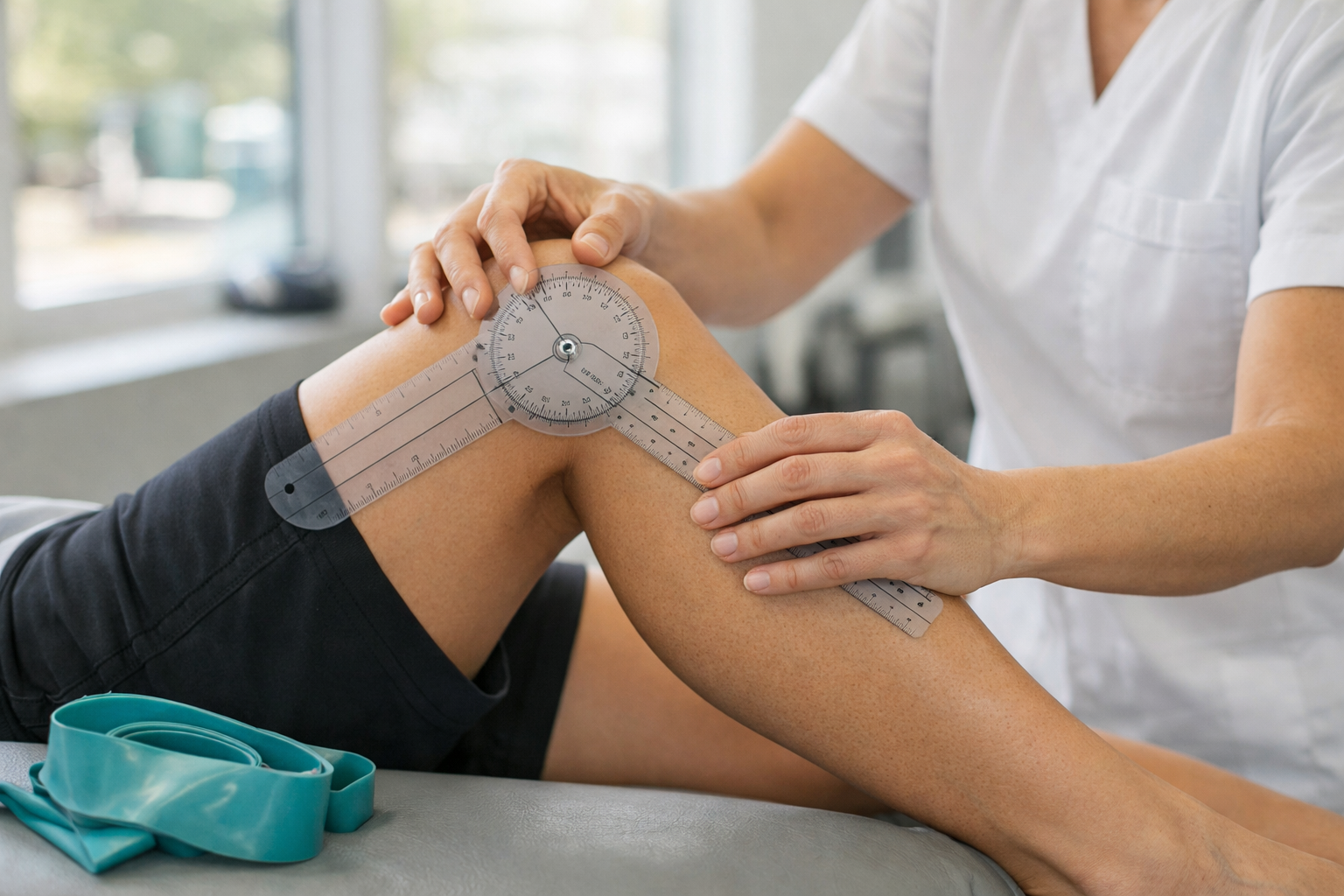
Range of motion refers to how far you can bend and straighten your knee.
After total knee replacement, surgeons measure progress in degrees:
- 0° = fully straight knee
- 90° = enough bend to sit comfortably
- 120°+ = deeper bend for stairs, cycling, and active movement
The primary goals of recovery are:
- Restoring full extension (straightening)
- Improving flexion (bending)
- Reducing stiffness and swelling
- Returning to functional daily movement
Most patients begin regaining motion immediately after surgery, but progress happens in phases.
Why Range of Motion Matters for Daily Life
Range of motion is not just a number — it directly affects how you live.
Different activities require different levels of knee flexion:
- Walking comfortably: A smooth walking pattern requires around 60°–70° of bend
- Sitting and standing: Getting up from a chair typically requires 90°–100°
- Climbing stairs: Stairs demand closer to 110° of motion
- Returning to recreation: Activities like cycling or golfing may require 120° or more, depending on intensity
Achieving strong mobility is one of the reasons total knee replacement is so life-changing for patients who have struggled with pain and limitation for years.
Expected Range of Motion Timeline After Surgery
Recovery does not happen overnight. Here’s a realistic timeline for most patients after total knee replacement.
Week 1–2: Early Mobility
In the first days after surgery, swelling and soreness limit movement.
Most patients focus on:
- Gentle bending exercises
- Walking with support
- Achieving 70°–90° of flexion
The priority is preventing stiffness early.
Weeks 3–6: Major Gains Begin
This is when physical therapy becomes essential.
Patients often reach:
- 90°–110° of motion
- Improved walking stability
- Easier sitting and standing
Progress may feel slow, but this is a critical rebuilding phase.
Weeks 6–12: Functional Range Returns
By this stage, many patients experience noticeable freedom.
Typical outcomes:
- 110°–120° flexion
- Reduced swelling
- Stronger muscles supporting the knee
Many people can resume low-impact daily activities comfortably.
3–12 Months: Long-Term Improvement
Range of motion can continue improving for up to a full year.
Patients may achieve:
- Their best final mobility
- Increased endurance
- Greater confidence with stairs and movement
This is where consistent effort pays off long-term.
What Affects How Much Motion You Regain?
Not every patient recovers the exact same way. Range of motion depends on several factors:
Pre-surgery knee stiffness:
Patients with very limited motion before surgery may need more time to improve.
Commitment to physical therapy:
Therapy is often the deciding factor between average recovery and excellent recovery.
Swelling and scar tissue:
Inflammation can temporarily limit bending, especially in early weeks.
Surgical expertise and planning:
A well-aligned implant and personalized approach can improve overall outcomes. Specialists like Dr. Michael Hunter emphasize advanced surgical techniques and recovery protocols through our knee replacement services to help maximize long-term function.
How Patients Can Improve Range of Motion Faster
While healing takes time, patients can take steps that make a major difference:
- Start movement early — the first weeks after surgery are essential for preventing stiffness
- Stay consistent with exercises — daily stretching and strengthening are more effective than occasional effort
- Control swelling — ice, elevation, and proper rest help improve comfort and flexibility
- Focus on extension first — straightening the knee fully is often more important early than deep bending
- Work with an experienced orthopedic team — guidance from a specialist ensures therapy goals are realistic and safe
Key Takeaways
- Total knee replacement can dramatically restore comfort and mobility
- Most patients achieve 110°–120° of bend within 2–3 months
- Full range-of-motion improvement continues for up to a year
- Physical therapy and consistency are the biggest predictors of success
- Expert surgical planning supports stronger long-term function
If knee pain or arthritis has limited your movement, our knee replacement services may be the solution that allows you to walk, bend, and live normally again.
FAQs
What is a good range of motion after total knee replacement?
Most patients aim for at least 110° of knee bend, which allows comfortable walking and stair use. Some achieve 120° or more with dedicated therapy. Final results depend on your starting mobility and recovery effort.
How long does it take to bend the knee normally after surgery?
Most patients regain functional bending within 6–12 weeks. Early progress happens quickly, but full improvement continues for several months. Consistency with therapy is essential for the best results.
Will I ever be able to fully bend my knee again?
Many patients regain enough motion for all normal daily activities. Deep kneeling or squatting may remain limited depending on implant type and anatomy. Your surgeon can provide personalized expectations based on your condition.
What happens if range of motion doesn’t improve?
If stiffness persists, your orthopedic team may adjust therapy intensity or evaluate scar tissue development. Early intervention is important to prevent long-term limitation. Most patients improve steadily with the right plan.
Is physical therapy really necessary after total knee replacement?
Yes — physical therapy is one of the most important parts of recovery. It strengthens muscles, restores motion, and prevents stiffness. Patients who stay consistent typically achieve the best mobility outcomes.
Ready to discuss your hip or knee concerns with Dr. Hunter?