Baker's cyst behind the knee
What Causes a Baker's Cyst Behind the Knee and Will It Go Away?
Introduction
A noticeable lump or feeling of fullness behind the knee can be concerning, especially when it appears alongside stiffness, swelling, or discomfort. One common explanation is a Baker's cyst, a fluid-filled swelling that develops behind the knee when excess joint fluid collects in this area.
At Dr. Michael Hunter Orthopedic Surgery, evaluating a Baker's cyst behind the knee involves looking beyond the cyst itself. Conditions such as arthritis, cartilage damage, or other sources of inflammation inside the knee can increase joint fluid production and contribute to cyst formation.
Some Baker's cysts become smaller or resolve when the underlying knee irritation improves. Others persist or return because the condition responsible for producing excess fluid remains active. Understanding that relationship is important when deciding whether observation, conservative treatment, or further orthopedic evaluation is appropriate.
TLDR – Quick Guide
- A Baker's cyst is a fluid-filled swelling that develops behind the knee.
- It usually forms when excess fluid from inside the knee collects toward the back of the joint.
- Arthritis and other conditions that irritate the knee can contribute to cyst formation.
- Small Baker's cysts may cause few or no symptoms.
- Larger cysts can produce tightness, stiffness, discomfort, or restricted knee movement.
- Some cysts decrease as the underlying knee inflammation improves.
- Treating only the cyst may not prevent recurrence if the underlying knee problem remains.
- Sudden calf pain or swelling requires prompt evaluation because other conditions can produce similar symptoms.
- Learn more about Baker's Cyst and available treatment considerations.
What Is a Baker's Cyst?
Excess Joint Fluid Collects Behind the Knee
A Baker's cyst, also called a popliteal cyst, is a fluid-filled swelling located at the back of the knee.
The knee normally contains synovial fluid that helps lubricate the joint. When irritation inside the knee causes additional fluid to be produced, some of that fluid can move toward the back of the joint and create a noticeable pocket.
The cyst may feel soft or firm depending on its size and the position of the knee.
Some patients notice an obvious lump, while others primarily experience pressure, tightness, or stiffness behind the knee.
What Causes a Baker's Cyst Behind the Knee?
The Cyst Often Develops Because of Another Knee Problem
A Baker's cyst frequently develops because something inside the knee is producing persistent inflammation or excess joint fluid.
Rather than being an isolated condition, the cyst can be a consequence of an underlying knee disorder.
Potential contributors include:
- Knee arthritis
- Osteoarthritis
- Meniscus injuries
- Cartilage damage
- Joint inflammation
- Other conditions that increase fluid inside the knee
Identifying the underlying problem is important because treating the cause may help reduce both knee symptoms and the likelihood that the cyst will persist.
How Does Knee Arthritis Cause a Baker's Cyst?
Joint Inflammation Can Increase Fluid Production
Arthritis is one common condition associated with Baker's cyst formation.
As the knee joint becomes irritated, it may produce additional synovial fluid. Increased fluid and pressure within the joint can encourage fluid to collect behind the knee.
Patients with Knee Arthritis may therefore experience both symptoms within the joint and fullness or swelling toward the back of the knee.
Managing the arthritis may help reduce the inflammation contributing to cyst formation.
What Is the Connection Between Osteoarthritis and Baker's Cysts?
Degenerative Changes Can Keep the Knee Irritated
Osteoarthritis develops as cartilage within the knee deteriorates and the joint undergoes degenerative changes.
These changes can contribute to pain, stiffness, inflammation, and excess joint fluid. When that fluid accumulates behind the knee, a Baker's cyst may develop.
Patients with Knee Osteoarthritis may notice that cyst symptoms fluctuate along with the overall condition of the knee.
This is one reason treatment often focuses on managing the joint rather than viewing the cyst as an entirely separate problem.
What Does a Baker's Cyst Feel Like?
Symptoms Can Range From Mild Fullness to Significant Tightness
Not every Baker's cyst causes noticeable pain.
A small cyst may be discovered incidentally during an examination or imaging performed for another knee problem. Larger cysts can create more noticeable symptoms.
Patients may experience:
- A lump behind the knee
- Fullness or pressure
- Tightness
- Stiffness
- Pain behind the knee
- Difficulty fully bending the knee
- Discomfort after prolonged activity
- Swelling that changes with activity
Symptoms may become more noticeable when the knee is fully extended or after activities that increase joint irritation.
Can a Baker's Cyst Cause Knee Pain?
The Cyst and Underlying Condition May Both Contribute
A Baker's cyst can produce discomfort, particularly when it becomes large enough to create pressure behind the knee.
However, pain may also originate from the condition that caused the cyst. Arthritis, cartilage damage, or another intra-articular problem can produce knee pain independently of the swelling behind the joint.
This distinction matters when developing a treatment plan.
Dr. Hunter's Knee Pain resource provides additional information about the different conditions that may contribute to persistent knee symptoms.
Will a Baker's Cyst Go Away on Its Own?
Some Cysts Improve When Knee Irritation Decreases
A Baker's cyst can sometimes become smaller or resolve without direct treatment, particularly when the underlying knee inflammation improves.
For example, if a temporary episode of joint irritation settles, excess fluid production may decrease and the cyst may gradually become less noticeable.
However, a cyst associated with persistent arthritis or another ongoing structural problem may remain or repeatedly return.
Whether the cyst goes away therefore depends partly on what caused it in the first place.
How Long Does a Baker's Cyst Last?
There Is No Universal Timeline
The duration of a Baker's cyst varies considerably.
Some cysts decrease as the underlying inflammation settles, while others remain for months or recur intermittently. The size of the cyst alone does not determine how long it will last.
Patients should pay attention to the overall pattern of symptoms.
A cyst that remains stable and minimally symptomatic may require a different approach from one that continues enlarging, restricts motion, or causes significant discomfort.
Can Rest Make a Baker's Cyst Go Away?
Reducing Aggravating Activity May Help Symptoms
Temporary activity modification may help when repetitive activity is increasing inflammation within the knee.
Reducing activities that consistently cause pain or swelling can allow irritation to settle. Ice or other conservative measures may also be recommended depending on the underlying condition and individual circumstances.
However, rest alone does not necessarily correct arthritis, cartilage damage, or another persistent cause of joint inflammation.
If symptoms repeatedly return as soon as normal activity resumes, identifying the underlying knee problem becomes particularly important.
Should You Exercise With a Baker's Cyst?
Appropriate Movement May Still Be Beneficial
Having a Baker's cyst does not automatically mean all exercise should stop.
Low-impact activity and appropriately selected strengthening exercises may help maintain knee mobility and support the muscles surrounding the joint. Activities that substantially increase pain, tightness, or swelling may need to be modified temporarily.
The appropriate exercise program depends on what is causing the cyst.
A patient with arthritis, for example, may need a different rehabilitation approach from an athlete whose symptoms are related to another knee injury.
Can Physical Therapy Help?
Rehabilitation May Address the Underlying Knee Mechanics
Physical therapy may help manage symptoms when weakness, reduced mobility, or altered movement patterns are contributing to the overall knee problem.
A rehabilitation program may include exercises designed to improve:
- Knee range of motion
- Quadriceps strength
- Hip strength
- Lower-extremity control
- Balance
- Functional movement
- Tolerance for everyday activities
Physical therapy does not directly remove the cyst. Instead, it can be part of a broader strategy for improving knee function and managing the condition contributing to joint irritation.
Should a Baker's Cyst Be Drained?
Removing Fluid Does Not Always Address the Cause
In selected cases, a healthcare professional may consider aspiration to remove fluid from a symptomatic cyst or from the knee joint.
However, draining the fluid does not necessarily correct the underlying reason the knee produced excess fluid. If arthritis or another source of inflammation remains active, fluid can accumulate again.
This possibility is why evaluation of the underlying joint is important before focusing exclusively on the visible swelling.
Treatment decisions should consider symptom severity, cyst size, underlying knee pathology, and the patient's functional limitations.
Can a Baker's Cyst Come Back After Treatment?
Recurrence Can Happen
Yes, a Baker's cyst can recur.
If the knee continues producing excess synovial fluid, another collection can form behind the joint even after the original cyst decreases or is treated.
Recurrence is particularly relevant when chronic conditions such as arthritis continue irritating the knee.
Long-term management therefore often focuses on controlling the underlying joint problem rather than repeatedly treating the cyst alone.
Can a Baker's Cyst Rupture?
A Ruptured Cyst Can Cause Sudden Calf Symptoms
A Baker's cyst can occasionally rupture and release fluid into the tissues of the lower leg.
This may cause sudden pain, swelling, or tightness in the calf. These symptoms can resemble those caused by other potentially serious conditions, including a blood clot.
Because it can be difficult to distinguish the cause based on symptoms alone, sudden unexplained calf pain or swelling should receive prompt medical evaluation.
Patients should not assume that new calf symptoms are simply caused by a known Baker's cyst.
When Should You See an Orthopedic Specialist?
Persistent or Changing Symptoms Deserve Evaluation
A Baker's cyst may not require extensive treatment when it is small and causes minimal symptoms.
Orthopedic evaluation becomes more important when the swelling persists, increases, interferes with knee movement, or occurs alongside significant pain.
Consider evaluation for:
- Persistent swelling behind the knee
- Increasing cyst size
- Recurring knee swelling
- Significant pain
- Reduced range of motion
- Difficulty walking or exercising
- Locking or catching
- Knee instability
- Symptoms that continue despite conservative care
A Sports Medicine evaluation may be particularly helpful for active patients whose symptoms interfere with exercise or athletic activity.
How Is the Cause of a Baker's Cyst Diagnosed?
The Entire Knee Should Be Evaluated
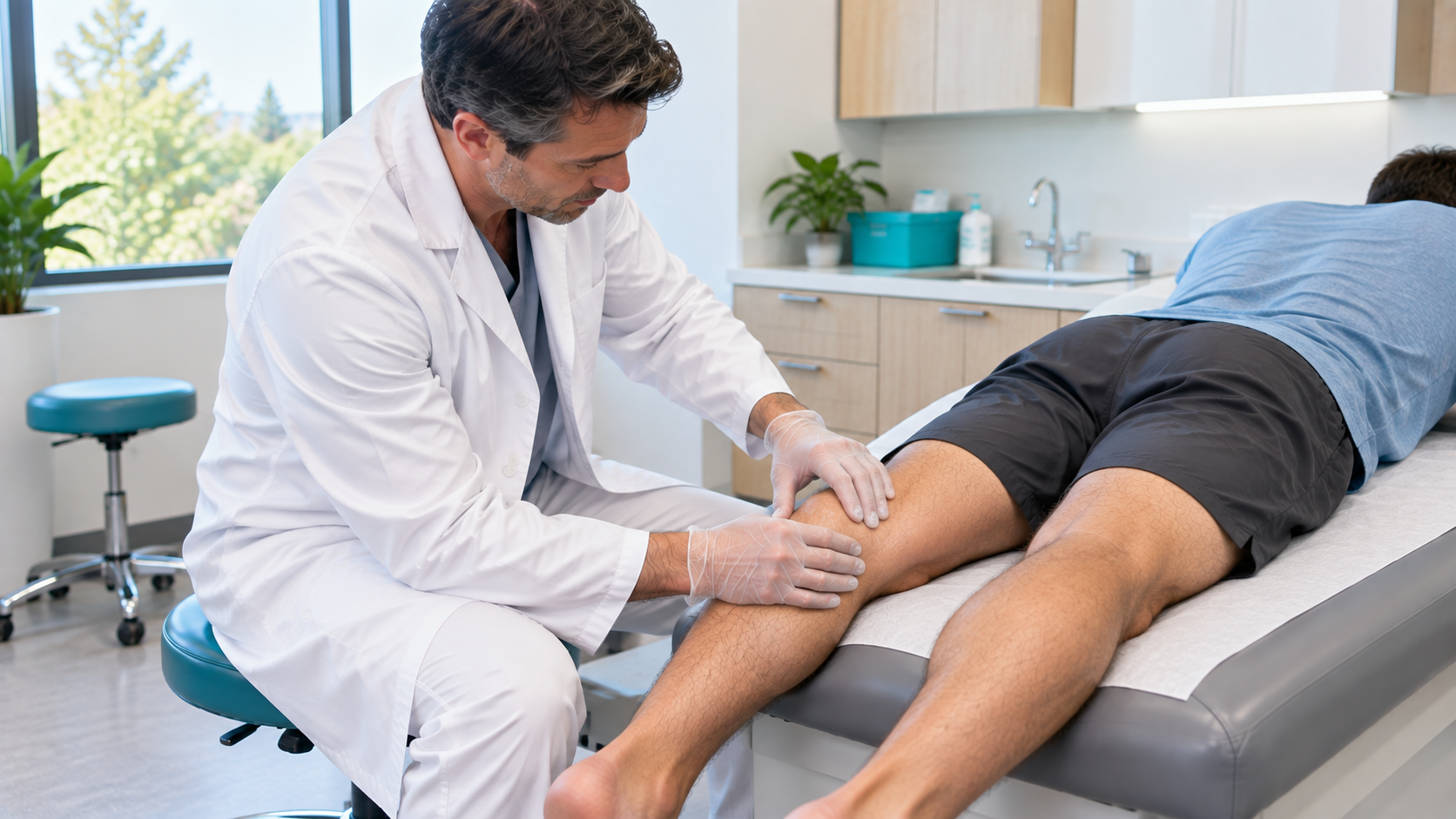
Diagnosis may begin with a physical examination of both the cyst and the knee.
The orthopedic specialist may assess swelling, tenderness, range of motion, stability, and other symptoms. Imaging may be recommended when necessary to confirm the diagnosis or investigate the underlying joint.
The objective is not simply to establish that fluid is present behind the knee.
Understanding why the knee is producing excess fluid can help determine which treatment strategy is most likely to provide meaningful improvement.
What If Arthritis Is Causing the Cyst?
Treatment Can Focus on Managing the Joint
When arthritis is the underlying problem, treatment generally focuses on reducing symptoms and maintaining knee function.
Depending on the severity of arthritis, options may include activity modification, rehabilitation, medications when medically appropriate, injections in selected cases, and other nonsurgical strategies.
Patients with earlier degenerative changes can learn more about Knee Replacement Alternatives for Early Arthritis.
Addressing arthritis may help reduce joint irritation and excess fluid production, although the response of an existing Baker's cyst can vary.
Does a Baker's Cyst Mean You Need Knee Surgery?
Most Cysts Do Not Automatically Require an Operation
Finding a Baker's cyst does not mean knee surgery is necessary.
Treatment depends on the underlying condition, severity of symptoms, and effect on everyday function. Many patients can initially be treated conservatively.
Surgery may be considered when a specific structural problem within the knee requires operative treatment, but removing the cyst itself is not routinely necessary simply because it exists.
The most appropriate strategy focuses on the cause of the knee inflammation rather than the presence of the cyst alone.
Key Takeaways
- A Baker's cyst behind the knee is a fluid-filled swelling associated with excess joint fluid.
- Baker's cysts commonly develop because another condition is irritating the knee.
- Knee arthritis and osteoarthritis can contribute to cyst formation by increasing inflammation and fluid production.
- Symptoms may include fullness, tightness, stiffness, swelling, or pain behind the knee.
- Some Baker's cysts decrease or resolve as the underlying knee irritation improves.
- Persistent arthritis or another ongoing joint problem can cause the cyst to remain or recur.
- Rest may reduce symptoms without eliminating the underlying cause.
- Physical therapy can support knee strength, mobility, and function but does not directly remove the cyst.
- Draining a cyst does not guarantee that it will not return.
- Sudden calf pain or swelling requires prompt medical evaluation because it can resemble other conditions.
- Treating the underlying knee problem is often central to long-term management.
FAQs
What causes a Baker's cyst behind the knee?
A Baker's cyst forms when excess fluid from inside the knee collects toward the back of the joint. Conditions that cause inflammation, including arthritis and other internal knee problems, can increase fluid production and contribute to cyst formation. Identifying the underlying cause can help guide treatment and reduce recurring symptoms.
Will a Baker's cyst go away without treatment?
Some Baker's cysts become smaller or resolve when the inflammation inside the knee improves. Cysts associated with an ongoing problem such as arthritis may persist or return because the knee continues producing excess fluid. Whether treatment is necessary depends on symptoms, the underlying condition, and the effect on knee function.
Is walking good for a Baker's cyst?
Walking may be appropriate when it does not significantly increase pain, tightness, or swelling. If longer walks repeatedly aggravate symptoms, activity may need to be temporarily modified while the underlying knee condition is addressed. An orthopedic or rehabilitation professional can provide individualized activity recommendations based on the cause of the cyst.
Can a Baker's cyst burst?
A Baker's cyst can occasionally rupture, allowing fluid to travel into the tissues of the calf. This can cause sudden calf pain, tightness, or swelling that may resemble symptoms of a blood clot or another condition. New or significant calf symptoms should therefore receive prompt medical evaluation rather than being assumed to come from the cyst.
Does a Baker's cyst need surgery?
Most Baker's cysts do not require surgery simply because they are present. Treatment generally focuses on the condition causing excess fluid within the knee, particularly when arthritis or another joint problem is responsible. Surgery may be considered when a specific underlying structural problem requires operative treatment or symptoms remain substantial despite appropriate care.
Ready to discuss your hip or knee concerns with Dr. Hunter?