knee bursitis not going away
Why Is Knee Bursitis Not Going Away and When Should You See a Doctor?
Introduction
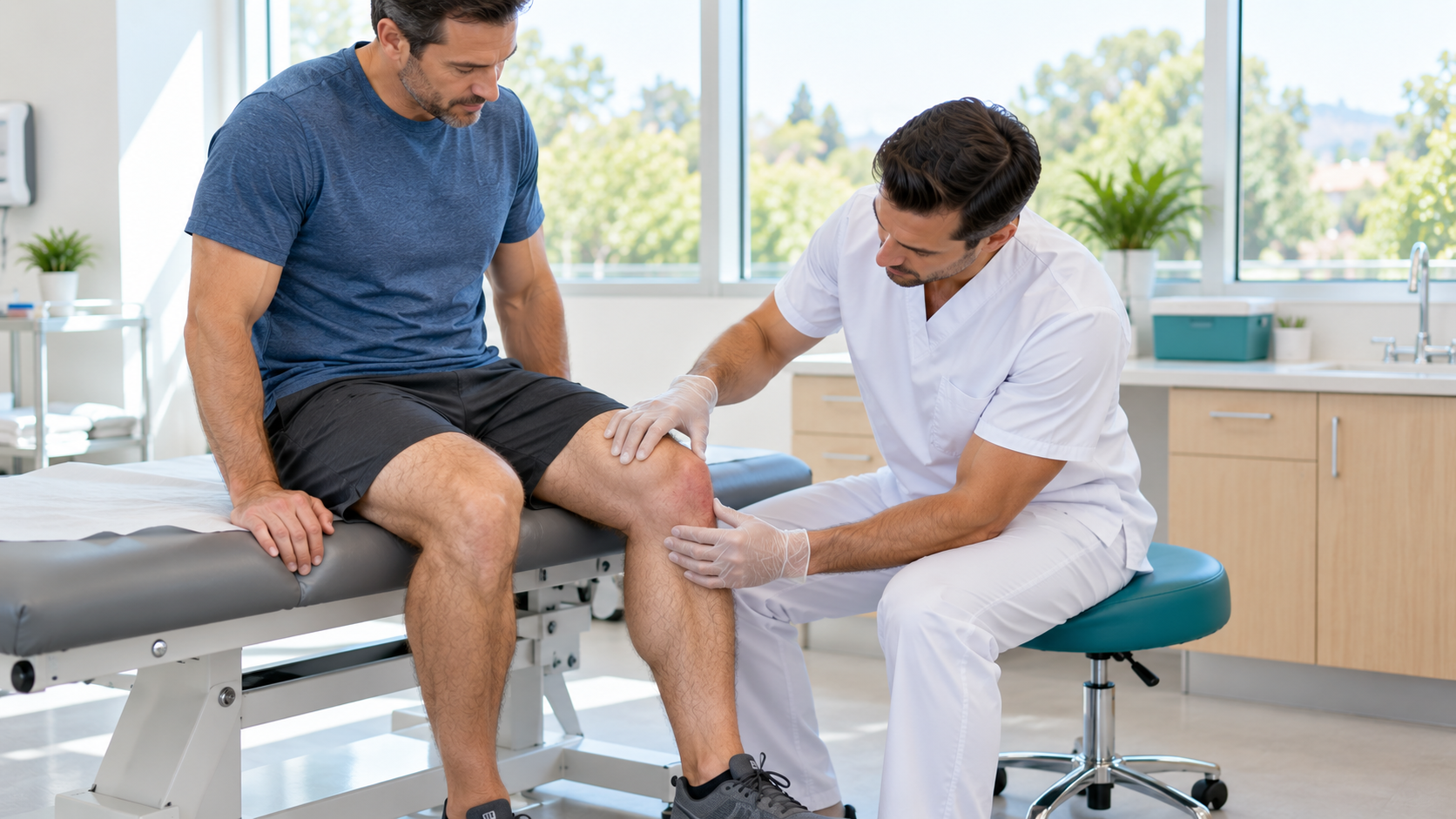
Knee bursitis can cause localized pain, tenderness, and swelling that makes kneeling, walking, exercising, or completing everyday activities uncomfortable. Mild cases may improve after reducing the activity that irritated the knee, but symptoms can persist when the bursa continues to experience pressure, repetitive stress, or another underlying problem.
At Dr. Michael Hunter Orthopedic Surgery, evaluating knee bursitis not going away involves determining which bursa is affected, what originally caused the irritation, and whether another knee condition is contributing to persistent symptoms. Repetitive kneeling, overuse, direct trauma, infection, and other sources of inflammation can require different treatment approaches.
When swelling or pain repeatedly returns despite appropriate activity modification, simply waiting longer may not address the cause. An orthopedic evaluation can help confirm the diagnosis and determine what is preventing the knee from improving.
TLDR – Quick Guide
- Knee bursitis occurs when one of the small fluid-filled bursae around the knee becomes irritated or inflamed.
- Repeated kneeling, pressure, overuse, or direct trauma can contribute to bursitis.
- Continuing the activity that caused the irritation may prevent symptoms from settling.
- Recovery can also stall if activity is resumed too aggressively after symptoms temporarily improve.
- Not every swollen or painful knee is caused by bursitis.
- Arthritis and other knee conditions can produce overlapping symptoms.
- Redness, warmth, fever, drainage, or rapidly worsening swelling require prompt medical evaluation because infection is possible.
- Persistent bursitis may need treatment beyond rest alone.
- A Sports Medicine evaluation can help active patients identify aggravating factors and return to activity appropriately.
- Symptoms that repeatedly return or fail to improve should be assessed to confirm the diagnosis.
What Is Knee Bursitis?
A Bursa Helps Reduce Friction Around the Knee
Bursae are small fluid-filled sacs located around joints. They help reduce friction between structures such as skin, tendons, and bone.
Several bursae are located around the knee. When one becomes irritated, patients may develop localized swelling, tenderness, and pain.
Symptoms depend partly on which bursa is affected and what caused the irritation.
Patients can learn more about symptoms and treatment through Dr. Hunter's Knee Bursitis resource.
Why Is My Knee Bursitis Not Going Away?
The Bursa May Still Be Exposed to the Original Irritation
One of the most common reasons symptoms persist is continued exposure to whatever irritated the bursa initially.
For example, a patient may reduce activity for several days but continue kneeling frequently at work. An athlete may rest until pain improves and then immediately return to the same training volume.
Potential reasons for persistent symptoms include:
- Repeated kneeling
- Continued pressure on the knee
- Returning to exercise too quickly
- Repetitive athletic activity
- Inadequate recovery between activities
- Direct irritation or repeated minor trauma
- Another underlying knee condition
- Infection in certain cases
- An incorrect initial diagnosis
Determining which factor is responsible is important because treatment should address the cause rather than symptoms alone.
Can Repeated Kneeling Keep Knee Bursitis Inflamed?
Direct Pressure Can Repeatedly Irritate the Bursa
Some bursae sit close to the surface of the knee and can be particularly sensitive to direct pressure.
People whose occupations, hobbies, or household activities require frequent kneeling may repeatedly irritate these structures. Even when symptoms improve during rest, returning to the same pressure can cause another flare-up.
Reducing direct pressure can therefore be an important part of recovery.
When kneeling cannot be completely avoided, modifying the activity and using appropriate cushioning may help reduce repeated irritation.
Can Exercise Prevent Knee Bursitis From Healing?
Activity Can Continue Irritating Sensitive Tissue
Exercise does not necessarily need to stop completely, but activities that repeatedly increase pain or swelling may need temporary modification.
Running, jumping, squatting, or other exercises may aggravate certain types of bursitis depending on the location and underlying cause.
The goal is to maintain appropriate activity without repeatedly overwhelming the irritated area.
As symptoms improve, exercise can generally be reintroduced progressively rather than moving immediately back to the previous training level.
Why Does Knee Bursitis Keep Coming Back?
Temporary Symptom Relief Does Not Always Address the Cause
Recurring bursitis often indicates that an aggravating factor remains.
A patient may use rest and ice until swelling decreases but then resume the same kneeling, training, or occupational activity that originally caused the problem. Without modifying that exposure, irritation can return.
Recurring symptoms can also indicate that something other than isolated bursitis is affecting the knee.
When repeated episodes continue despite reasonable changes in activity, orthopedic evaluation can help determine whether another condition needs to be addressed.
How Long Does Knee Bursitis Take to Go Away?
Recovery Time Depends on the Cause
There is no single recovery timeline for every case of knee bursitis.
Mild irritation may improve relatively quickly once the aggravating activity is reduced. More persistent bursitis may take longer, especially when symptoms have been present for an extended period or the knee continues to experience repetitive stress.
The cause also matters.
Bursitis related to mechanical irritation follows a different treatment path from suspected infection, and symptoms associated with another underlying knee disorder may not fully resolve until that condition is addressed.
Can Rest Alone Treat Knee Bursitis?
Rest May Help Without Solving Every Contributor
Temporary rest can reduce irritation, particularly when symptoms developed after repetitive activity.
However, rest alone may not correct movement problems, training errors, occupational exposure, or another knee condition contributing to symptoms.
Extended inactivity can also lead to weakness and make returning to normal activity more difficult.
A more comprehensive approach may include activity modification, gradual rehabilitation, and treatment of the underlying cause when one is identified.
Can Physical Therapy Help Persistent Knee Bursitis?
Rehabilitation May Address Contributing Factors
Physical therapy may be appropriate when strength, flexibility, movement mechanics, or activity tolerance contribute to recurring symptoms.
Depending on the individual, rehabilitation may address:
- Knee mobility
- Quadriceps strength
- Hip strength
- Lower-extremity control
- Flexibility when appropriate
- Balance
- Functional movement
- Gradual return to exercise
Physical therapy does not treat every form of bursitis, particularly when infection is suspected.
For noninfectious problems, however, rehabilitation can be useful when the goal is to address factors contributing to repeated irritation and restore normal activity.
Could Knee Arthritis Be Causing Persistent Symptoms?
Joint Problems Can Produce Overlapping Pain and Swelling
Not every painful or swollen knee is caused solely by an irritated bursa.
Knee Arthritis can cause pain, stiffness, swelling, and difficulty with weight-bearing activities. Arthritis-related symptoms may coexist with bursitis or create discomfort that a patient assumes is coming from the bursa.
This distinction becomes particularly important when symptoms continue despite appropriate treatment for bursitis.
An orthopedic evaluation can help determine whether the pain is primarily coming from a superficial bursa, the joint itself, or multiple structures.
How Can You Tell Bursitis From Other Knee Pain?
Pain Location and Symptoms Provide Important Clues
Bursitis often causes relatively localized tenderness and swelling near the affected bursa.
Other knee conditions may cause deeper joint pain, mechanical symptoms, instability, stiffness, or more generalized swelling. However, symptoms can overlap enough that self-diagnosis is not always reliable.
Dr. Hunter's Knee Pain resource provides additional information about conditions that can contribute to persistent knee symptoms.
When pain does not improve as expected, confirming the diagnosis becomes more important than repeatedly treating the knee as bursitis.
Can Knee Bursitis Become Infected?
Septic Bursitis Requires Medical Attention
A bursa can sometimes become infected, a condition known as septic bursitis.
This is different from irritation caused by repetitive pressure or overuse and requires medical evaluation. Infection may occur when bacteria enter through a cut, scrape, puncture, or another route.
Warning signs can include:
- Increasing redness
- Significant warmth
- Rapidly worsening swelling
- Increasing tenderness
- Fever or chills
- Drainage from the area
- Feeling generally unwell
These symptoms should not be managed solely with rest and home treatment.
Prompt medical assessment is important when infection is possible.
Should You Drain Knee Bursitis?
Aspiration Is Appropriate Only in Selected Situations
Some patients with significant swelling may wonder whether removing fluid will make bursitis disappear.
Aspiration may be considered in selected cases for diagnostic or therapeutic reasons. For example, fluid analysis may help when infection or another cause needs to be investigated.
However, removing fluid does not necessarily prevent the bursa from filling again if the underlying irritation continues.
Aspiration should be performed by an appropriately trained healthcare professional rather than attempted at home because introducing bacteria can create a serious complication.
Does Persistent Knee Bursitis Require Surgery?
Surgery Is Not Usually the First Treatment
Most cases of noninfectious knee bursitis do not automatically require surgery.
Treatment generally begins by addressing the cause, modifying aggravating activities, and using appropriate conservative measures. Rehabilitation or other treatments may be considered depending on the specific type of bursitis and symptoms.
Patients with persistent knee pain sometimes worry that surgery is inevitable when conservative treatment has not provided immediate relief.
Dr. Hunter's guide to Knee Pain: Surgery vs Physical Therapy explains why treatment decisions depend on the underlying diagnosis and functional limitations rather than pain alone.
What If Knee Bursitis Has Lasted for Months?
Chronic Symptoms Deserve Reassessment
When presumed bursitis continues for months, repeatedly waiting for it to disappear may not be the best approach.
The knee may still be exposed to an aggravating activity, or another condition may be contributing to the symptoms. The diagnosis itself may also need to be reconsidered.
Evaluation may include a physical examination and, when appropriate, imaging or fluid analysis.
The objective is to determine why symptoms have persisted and whether the treatment strategy needs to change.
How Can Sports Medicine Help?
Active Patients May Need a Structured Return to Activity
Athletes and active adults may find it difficult to determine how much exercise is appropriate while recovering.
A Sports Medicine evaluation can consider training volume, movement demands, strength, symptom patterns, and the specific activities that aggravate the knee.
Treatment may include modifying training temporarily while maintaining appropriate conditioning.
As symptoms improve, activity can be progressively increased so the knee is not suddenly exposed to the same workload that originally triggered the problem.
Can Returning to Sports Too Soon Cause Another Flare-Up?
Pain Relief Does Not Always Mean Full Recovery
A knee may feel comfortable during several days of reduced activity but become painful again during a demanding workout.
This does not necessarily mean the treatment failed. It may mean that the transition back to exercise was too aggressive.
Running distance, training frequency, jumping volume, strength work, and sport-specific activity may need to increase progressively.
Monitoring how the knee responds during and after exercise can help determine whether the current workload is appropriate.
How Can You Prevent Knee Bursitis From Coming Back?
Reduce Repeated Irritation
Prevention depends on identifying what caused the bursitis.
Helpful strategies may include:
- Limiting prolonged kneeling when possible
- Using cushioning when kneeling is necessary
- Avoiding repeated direct pressure on the knee
- Increasing training volume gradually
- Allowing appropriate recovery between demanding sessions
- Maintaining lower-extremity strength
- Addressing movement or flexibility limitations when relevant
- Treating underlying knee conditions
No strategy can guarantee that bursitis will never recur, but reducing repeated irritation can lower the likelihood of continued flare-ups.
When Is a Sports Injury Taking Too Long to Heal?
Persistent Symptoms Can Signal the Need for a New Approach
Athletes sometimes continue alternating between rest and full activity without making meaningful progress.
When pain or swelling repeatedly returns, it may be necessary to reassess the diagnosis, rehabilitation strategy, and training demands.
Dr. Hunter's guide to Sports Injuries That Are Not Healing discusses reasons musculoskeletal symptoms may persist despite time away from activity.
A stalled recovery does not automatically mean surgery is necessary, but it can indicate that a more specific treatment plan is needed.
When Should You See a Doctor for Knee Bursitis?
Persistent or Concerning Symptoms Need Evaluation
Mild bursitis may improve with appropriate activity modification, but ongoing symptoms should not be ignored indefinitely.
Consider seeing a doctor when you experience:
- Swelling that does not improve
- Pain that persists despite activity modification
- Repeated episodes of bursitis
- Increasing difficulty walking
- Reduced knee movement
- Symptoms interfering with work or exercise
- Significant pain following an injury
- Uncertainty about whether the problem is actually bursitis
More urgent evaluation is appropriate for significant redness, warmth, rapidly increasing swelling, fever, drainage, or other symptoms that could indicate infection.
Key Takeaways
- When knee bursitis is not going away, continued irritation may be preventing the bursa from settling.
- Repetitive kneeling, pressure, overuse, and direct trauma can contribute to persistent symptoms.
- Returning to demanding activity too quickly can trigger another flare-up.
- Rest may temporarily reduce pain without addressing the underlying cause.
- Chronic or recurring symptoms may indicate another knee condition or an incorrect initial diagnosis.
- Knee arthritis can cause pain and swelling that overlap with bursitis symptoms.
- Physical therapy may help address strength, mobility, and movement factors in selected noninfectious cases.
- Aspiration may be appropriate in certain situations but does not guarantee that bursitis will not return.
- Most noninfectious cases do not automatically require surgery.
- Redness, warmth, fever, drainage, or rapidly worsening swelling may indicate infection and require prompt medical care.
- Persistent symptoms that interfere with daily activity or exercise should be evaluated by a doctor.
FAQs
Why is my knee bursitis not going away?
Knee bursitis may persist when the affected bursa continues to experience repetitive pressure, kneeling, overuse, or another source of irritation. An underlying knee condition or incorrect diagnosis can also contribute to symptoms that do not improve as expected. Persistent bursitis should be evaluated when reasonable activity modification and conservative care are not producing progress.
How long is too long for knee bursitis to last?
There is no exact duration that defines an abnormal recovery because the cause and severity of bursitis vary between patients. Symptoms that remain unchanged, repeatedly return, or continue interfering with normal activity despite appropriate care deserve further evaluation. A doctor can determine whether ongoing irritation, infection, arthritis, or another knee problem is contributing.
Can I exercise if I have knee bursitis?
Some exercise may remain appropriate if it does not substantially worsen pain or swelling. Activities that repeatedly irritate the affected bursa may need to be reduced or temporarily replaced while symptoms improve. A gradual return to exercise can help prevent immediately recreating the workload that contributed to the problem.
How do I know if my knee bursitis is infected?
Possible signs of infection include increasing redness, warmth, tenderness, swelling, fever, chills, or drainage around the affected area. These symptoms cannot always be reliably distinguished from noninfectious inflammation without medical evaluation. Suspected infection should receive prompt medical attention rather than being treated solely with home remedies.
When should I see a doctor for knee bursitis?
You should consider evaluation when swelling or pain persists despite appropriate activity modification, repeatedly returns, or significantly interferes with walking, work, or exercise. Prompt assessment is especially important when the knee becomes increasingly red, hot, swollen, or painful or when fever or drainage develops. A doctor can confirm whether bursitis is responsible and determine the most appropriate treatment.
Ready to discuss your hip or knee concerns with Dr. Hunter?