robotic knee replacement benefits
Are Robotic Knee Replacement Benefits Worth It for Active Adults?
Introduction
For active adults struggling with chronic knee pain, the idea of knee replacement surgery can be both exciting and overwhelming. While traditional knee replacement has helped millions regain mobility, newer technologies have introduced another option: robotic-assisted knee replacement.
Many patients wonder whether robotic technology actually improves outcomes or if it's simply a marketing buzzword. The reality is that robotic systems can provide surgeons with enhanced precision and planning capabilities, potentially improving implant positioning and surgical accuracy.
However, the most important question remains: are robotic knee replacement benefits truly worth it for active adults who want to stay mobile, exercise regularly, and maintain an active lifestyle?
Understanding how robotic-assisted surgery works and who may benefit most can help you make an informed treatment decision.
TLDR – Quick Guide
- Robotic-assisted knee replacement helps surgeons plan and perform procedures with greater precision.
- The technology does not perform the surgery independently; the surgeon remains in complete control.
- Potential robotic knee replacement benefits include improved implant alignment and personalized surgical planning.
- Active adults may experience improved joint function and confidence during recovery.
- Long-term success still depends on surgical expertise, implant selection, rehabilitation, and patient health.
- Patients with advanced Knee Arthritis or Knee Osteoarthritis may be candidates for robotic-assisted procedures.
- Robotic technology may be used during both total and Partial Knee Replacement procedures depending on the patient's condition.
What Is Robotic-Assisted Knee Replacement?
Understanding How the Technology Works
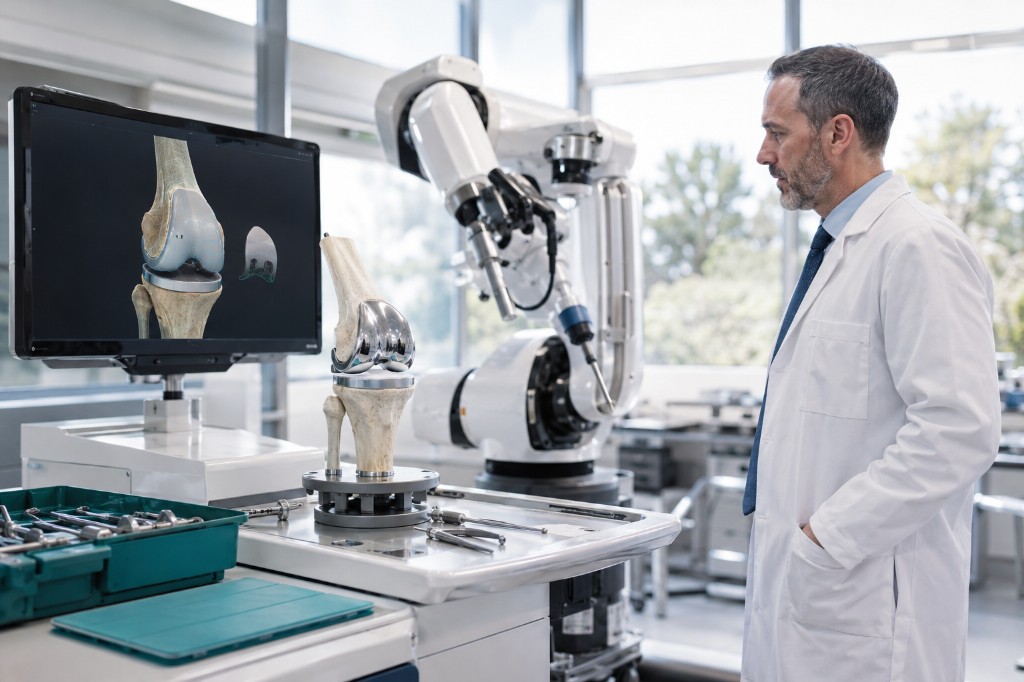
Robotic-assisted knee replacement combines advanced imaging, computer modeling, and real-time surgical guidance to help surgeons perform knee replacement procedures with exceptional accuracy.
Before surgery, the system creates a detailed three-dimensional model of the patient's knee. This allows the surgeon to carefully plan implant placement, alignment, and bone preparation based on the individual's unique anatomy.
During the procedure, robotic technology provides real-time feedback while the surgeon performs the operation. The robot does not make decisions or replace the surgeon. Instead, it serves as a sophisticated tool that enhances precision.
Patients considering surgery can learn more about available treatment options through Dr. Hunter's Knee Replacement Service.
Why Precision Matters in Knee Replacement
Small Adjustments Can Have a Big Impact
The knee is one of the body's most complex joints. Even small differences in implant alignment can affect how the joint feels and functions after surgery.
Proper positioning may help:
- Improve knee mechanics
- Reduce abnormal wear on implants
- Enhance joint stability
- Support natural movement patterns
- Improve overall patient satisfaction
Robotic technology allows surgeons to make highly accurate adjustments that may be difficult to achieve using traditional instruments alone.
For active adults who place greater demands on their knees, these improvements may contribute to a more natural-feeling joint after recovery.
The Most Common Robotic Knee Replacement Benefits
Potential Advantages for Active Patients
While every patient is different, robotic-assisted procedures may offer several benefits.
Potential advantages include:
- More personalized surgical planning
- Improved implant alignment
- Greater surgical precision
- Enhanced balance of soft tissues
- Potentially reduced bone removal
- More accurate restoration of knee mechanics
Many patients choose robotic-assisted surgery because they want the best possible opportunity to return to activities they enjoy.
However, it is important to remember that technology alone does not guarantee better outcomes. Surgical expertise remains critical.
Can Active Adults Return to Sports and Exercise?
What Patients Can Realistically Expect
One of the biggest concerns for active adults is whether they will be able to return to recreational activities after knee replacement.
Many patients successfully return to:
- Golf
- Hiking
- Cycling
- Swimming
- Strength training
- Pickleball
- Low-impact fitness programs
Patients who maintain active lifestyles often benefit from comprehensive rehabilitation programs designed to restore strength, flexibility, and balance.
Individuals involved in recreational athletics may also benefit from consultation through Dr. Hunter's Sports Medicine program, which focuses on helping patients return safely to physical activity.
Robotic Knee Replacement vs Traditional Knee Replacement
Comparing Modern Surgical Approaches
Both robotic-assisted and traditional knee replacement procedures can provide excellent outcomes.
Robotic-assisted surgery may offer:
- Enhanced planning tools
- Greater precision
- Improved consistency
- More customized treatment
Traditional knee replacement offers:
- Decades of proven success
- Excellent long-term outcomes
- Broad availability
- Strong clinical evidence
The most important factor is not necessarily whether robotics are used, but whether the procedure is performed by an experienced orthopedic surgeon using the appropriate technique for the patient.
Is Robotic Technology Helpful for Partial Knee Replacement?
Precision May Be Especially Valuable
Robotic assistance has become increasingly popular in Partial Knee Replacement procedures.
Unlike total knee replacement, partial knee replacement preserves healthy portions of the knee and focuses only on the damaged compartment.
Because less bone is removed and more natural structures are preserved, precision becomes particularly important.
Robotic guidance may help surgeons:
- Preserve healthy tissue
- Optimize implant placement
- Improve joint balance
- Maintain natural knee movement
For the right candidate, partial knee replacement can offer faster recovery and a more natural feeling knee.
Who Is a Good Candidate for Robotic Knee Replacement?
Factors Surgeons Consider
Not every patient requires robotic-assisted surgery, but many individuals may benefit from it.
Potential candidates include:
- Adults with advanced knee arthritis
- Patients seeking joint replacement after conservative treatments fail
- Active individuals who want to maintain mobility
- Patients interested in personalized surgical planning
- Individuals considering partial knee replacement
Many patients first begin exploring surgical options after years of living with Knee Arthritis or Knee Osteoarthritis.
A comprehensive evaluation helps determine whether robotic-assisted surgery is appropriate based on the severity of joint damage and individual goals.
Are the Benefits Worth It?
Evaluating Technology Through the Lens of Long-Term Outcomes
For many active adults, the answer is yes.
Robotic-assisted knee replacement provides an additional level of precision that may improve surgical planning and implant positioning. These advantages can be particularly appealing for patients who want to maximize function and maintain an active lifestyle.
However, robotic technology should be viewed as one component of a successful outcome—not the sole determining factor.
The most important elements remain:
- Accurate diagnosis
- Proper patient selection
- Surgical expertise
- High-quality implants
- Consistent rehabilitation
- Long-term commitment to joint health
When these factors work together, patients often achieve excellent results regardless of whether robotics are involved.
Understanding Your Knee Condition Before Surgery
Identifying the Root Cause of Knee Pain
Before considering surgery, it is important to understand the underlying cause of your symptoms.
Common conditions that lead to knee replacement include:
- Arthritis
- Cartilage degeneration
- Bone-on-bone joint wear
- Chronic inflammation
- Progressive joint deformity
Patients can explore additional information about common orthopedic conditions through Dr. Hunter's Conditions Overview resource center.
Understanding your diagnosis is the first step toward selecting the most appropriate treatment plan.
Key Takeaways
- Robotic-assisted knee replacement helps surgeons perform procedures with greater precision and personalization.
- The surgeon remains fully responsible for the operation; the robot serves as an advanced surgical tool.
- Robotic knee replacement benefits may include improved implant alignment and customized surgical planning.
- Active adults often appreciate the potential for enhanced joint function and mobility.
- Both robotic and traditional knee replacement procedures can provide excellent long-term outcomes.
- Robotic assistance may be particularly valuable during Partial Knee Replacement procedures.
- Conditions such as Knee Arthritis and Knee Osteoarthritis are common reasons patients pursue knee replacement surgery.
- Success depends on surgeon expertise, rehabilitation, and overall patient health as much as the technology itself.
- A consultation with an experienced orthopedic specialist can help determine the best approach for your individual needs.
FAQs
Is robotic knee replacement better than traditional knee replacement?
Robotic-assisted surgery offers enhanced precision and surgical planning capabilities. However, both robotic and traditional knee replacement procedures can provide excellent long-term outcomes. The experience of the surgeon remains one of the most important factors in success.
Does a robot perform the knee replacement surgery?
No, the robot does not perform the surgery independently. The orthopedic surgeon remains in complete control throughout the procedure. The robotic system provides guidance and real-time data that assist with surgical accuracy.
Do active adults benefit more from robotic knee replacement?
Many active adults appreciate the precision and customization offered by robotic-assisted surgery. Improved implant positioning may help optimize joint function and movement. However, individual results vary based on overall health, rehabilitation, and surgical technique.
Can robotic technology be used for partial knee replacement?
Yes, robotic systems are commonly used during partial knee replacement procedures. The technology can help surgeons preserve healthy tissue while precisely treating the damaged portion of the knee. This level of accuracy may contribute to improved outcomes for suitable candidates.
How do I know if I am a candidate for robotic knee replacement?
A comprehensive orthopedic evaluation is necessary to determine candidacy. Factors such as arthritis severity, knee anatomy, activity level, and treatment goals all influence the decision. Your surgeon can explain whether robotic-assisted surgery is appropriate for your condition.
Ready to discuss your hip or knee concerns with Dr. Hunter?