Introduction
Rest is often the first response to knee pain from running, but stopping activity does not always address the reason the pain developed. A runner may take days or even weeks away from training, feel temporarily better, and then notice the same discomfort around the kneecap as soon as running resumes.
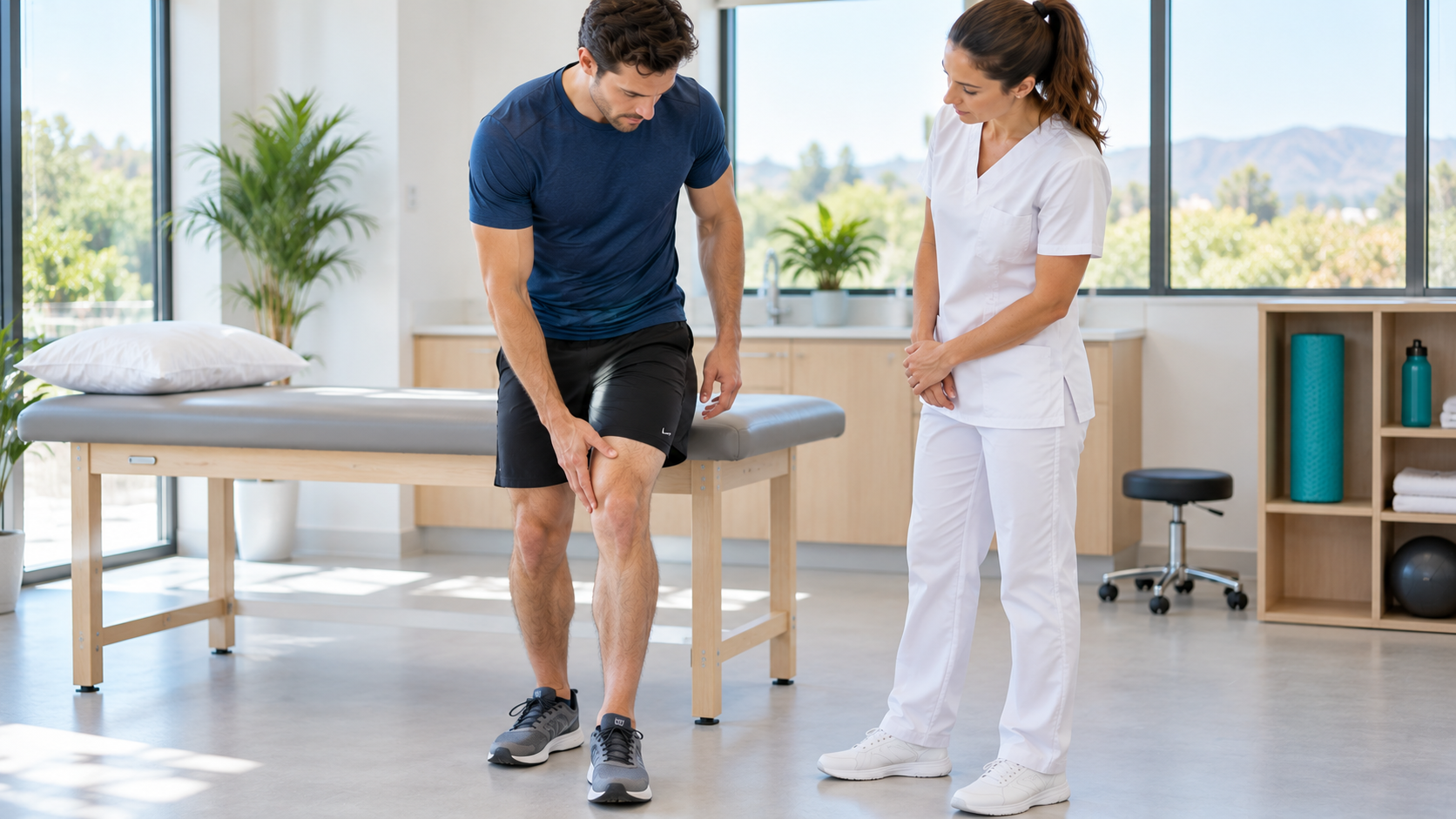
At Dr. Michael Hunter Orthopedic Surgery, persistent runner's knee is evaluated by looking beyond the painful area itself. Training load, muscle strength, movement mechanics, mobility, running demands, and other possible sources of knee pain can all contribute to symptoms. When runner's knee is not getting better, identifying these factors can be more useful than repeatedly resting and restarting activity.
Runner's knee commonly refers to patellofemoral pain, but persistent symptoms should be properly evaluated rather than assuming every case of pain around the kneecap has the same cause.
TLDR – Quick Guide
- Rest may temporarily reduce runner's knee symptoms without correcting the underlying problem.
- Patellofemoral pain often involves how the knee responds to repeated loading.
- Training errors, weakness, movement mechanics, and sudden increases in activity can contribute to symptoms.
- Hip and quadriceps strength can influence control of the lower extremity during running.
- Returning immediately to the same training volume may cause pain to recur.
- Complete inactivity for extended periods can also reduce strength and conditioning.
- Progressive rehabilitation usually involves strengthening and gradual reloading rather than rest alone.
- Persistent swelling, locking, instability, or significant loss of motion may indicate another knee problem.
- Sports Medicine can help determine why symptoms persist and guide a structured return to activity.
What Is Runner's Knee?
Patellofemoral Pain Commonly Affects Active People
Runner's knee is a commonly used term for pain involving the front of the knee, often associated with the patellofemoral joint where the kneecap interacts with the femur.
Symptoms may develop gradually rather than after one obvious injury. Running is a common trigger, but discomfort can also occur with stairs, squatting, jumping, prolonged sitting, or other activities that load the knee.
Common symptoms can include:
- Pain around or behind the kneecap
- Discomfort during or after running
- Pain when climbing or descending stairs
- Pain with squatting
- Discomfort after prolonged sitting
- Symptoms that worsen as training volume increases
Patients can learn more about this condition through Dr. Hunter's Patellofemoral Pain resource.
Why Doesn't Rest Always Fix Runner's Knee?
Rest Reduces Load but May Not Correct the Cause
Rest can be useful because temporarily reducing aggravating activity gives irritated tissues an opportunity to settle.
The limitation is that rest does not necessarily change the factors that contributed to the problem. If weakness, poor load tolerance, training errors, or movement patterns remain unchanged, the same symptoms may return when running resumes.
For example, a runner may take two weeks away from training and become pain-free during everyday activities. If that runner immediately returns to the previous mileage and intensity, the knee may again receive more load than it is prepared to tolerate.
This pattern can create a cycle of pain, rest, temporary improvement, and recurring symptoms.
Could Your Training Load Be the Problem?
Sudden Changes Can Exceed the Knee's Current Capacity
Running places repetitive forces through the lower extremities, and the body needs time to adapt to changes in training.
Symptoms may develop after increases in:
- Weekly mileage
- Running frequency
- Running speed
- Hill training
- Interval sessions
- Race preparation
- Cross-training volume
- Overall exercise intensity
The problem is not necessarily that running itself is harmful. Instead, the amount or intensity of activity may have increased faster than the knee's current capacity to tolerate it.
Reducing training temporarily can help, but the eventual return should also be gradual.
Why Does Runner's Knee Return When You Start Running Again?
The Knee May Not Be Prepared for the Previous Workload
Pain-free rest does not prove that the knee is ready for running.
Daily walking typically places different demands on the patellofemoral joint than repeated running, hills, speed work, or longer training sessions. A runner may therefore feel completely comfortable until higher loads are reintroduced.
If the return begins at the same mileage or intensity that previously caused symptoms, pain may recur quickly.
A progressive return allows the knee and surrounding muscles to rebuild tolerance rather than moving directly from inactivity to full training.
Can Weak Quadriceps Contribute to Runner's Knee?
Strength Helps the Knee Manage Repetitive Loads
The quadriceps play an important role in controlling the knee and supporting movement of the patellofemoral joint.
Pain can reduce normal muscle activation, and time away from training may contribute to additional weakness. If rehabilitation consists only of avoiding running, the strength needed for higher-level activity may not improve.
Progressive strengthening can help prepare the knee for increasing physical demands.
Exercise selection and progression should be individualized according to symptoms, strength, and functional limitations rather than assuming every runner needs the same program.
Can Hip Weakness Affect Knee Pain?
Knee Mechanics Are Influenced by the Entire Lower Extremity
Running involves coordinated movement through the hips, knees, ankles, and feet.
Hip muscle weakness or poor lower-extremity control can influence how the leg moves when the foot contacts the ground. This may affect the forces experienced around the knee during repetitive activity.
For this reason, rehabilitation for patellofemoral pain often extends beyond exercises that target only the knee.
Strengthening the hip and surrounding lower-extremity muscles may help improve control during squatting, running, landing, and other athletic movements.
Does Running Form Cause Runner's Knee?
Movement Mechanics Can Contribute to Symptoms
Running mechanics may be one piece of the problem, but there is not one universally correct running style that prevents patellofemoral pain.
Stride characteristics, cadence, lower-extremity control, running surface, footwear, speed, and fatigue can all influence the forces experienced during running.
When symptoms persist, a sports medicine or rehabilitation professional may assess movement patterns to identify factors that are relevant to the individual runner.
Changes should be purposeful rather than making multiple major adjustments at once without knowing which factors actually matter.
Can Too Much Rest Make Recovery Harder?
Complete Inactivity Can Reduce Physical Capacity
When running hurts, avoiding it temporarily may be appropriate. However, prolonged complete inactivity can lead to reduced muscle strength, cardiovascular conditioning, and tolerance for physical activity.
That can make returning to the previous training load even more difficult.
A more effective strategy for many patients is relative rest. This means reducing or temporarily removing activities that consistently aggravate symptoms while maintaining appropriate exercises that can be performed comfortably.
The goal is to create an environment where symptoms settle without unnecessarily losing the physical capacity needed to return to running.
What Role Does Physical Therapy Play?
Rehabilitation Addresses More Than Pain
Physical therapy can help identify and address functional deficits that rest alone cannot correct.
Depending on the individual, rehabilitation may include:
- Quadriceps strengthening
- Hip strengthening
- Core and lower-extremity control
- Mobility exercises
- Balance training
- Progressive squatting
- Step-up and step-down exercises
- Running preparation
- Gradual return-to-run programming
The goal is not simply to make the knee feel better while resting. Rehabilitation should gradually prepare the knee for the loads it will encounter when the patient resumes running.
How Should You Return to Running?
Increase Demand Gradually
A successful return to running usually involves progressive loading.
Some runners may begin with walking or a walk-jog program before increasing continuous running time. Distance, frequency, speed, and hills can then be added gradually according to symptoms and recovery.
It can be helpful to avoid increasing several training variables simultaneously.
The knee's response during exercise and afterward provides useful information about whether the current workload is appropriate.
Could Overuse Be Keeping the Knee Irritated?
Recovery Requires Balancing Training and Adaptation
Patellofemoral pain often develops in the context of repetitive loading rather than a single traumatic event.
Athletes who train frequently without enough time for adaptation may repeatedly expose the knee to more stress than it can currently tolerate. This can be especially relevant when multiple sports, strength training, and running sessions are combined.
Understanding Preventing Overuse Sports Injuries can help runners think about training progression, recovery, and workload rather than focusing only on the painful joint.
A well-designed program balances sufficient training stimulus with enough recovery for the body to adapt.
Is It Actually Runner's Knee?
Persistent Pain May Have Another Cause
Pain around the knee should not automatically be assumed to be patellofemoral pain simply because the patient runs.
Several conditions can produce overlapping symptoms. Depending on the location and characteristics of the pain, an orthopedic evaluation may consider other sources involving cartilage, tendons, ligaments, menisci, bone, or surrounding soft tissues.
Dr. Hunter's Knee Pain resource provides additional information about possible causes and treatment considerations.
An accurate diagnosis becomes particularly important when symptoms do not respond as expected to an appropriate period of conservative care.
What Symptoms Suggest Something Else May Be Wrong?
Certain Signs Deserve Further Evaluation
Persistent anterior knee discomfort can often be treated conservatively, but certain symptoms warrant additional attention.
Consider orthopedic evaluation if you experience:
- Significant or recurring swelling
- True knee locking
- Repeated giving way
- Inability to fully bend or straighten the knee
- Significant pain following an acute injury
- Pain that progressively worsens
- Difficulty bearing weight
- Symptoms that persist despite appropriate rehabilitation
These findings do not automatically indicate a serious injury, but they may suggest that the knee needs a more detailed assessment.
Why Isn't Stretching Alone Fixing the Problem?
Flexibility Is Only One Part of Knee Function
Stretching may be useful when specific mobility limitations are present, but it does not address every contributor to runner's knee.
A runner with adequate flexibility may still have insufficient strength, poor load tolerance, or movement-control deficits. Stretching alone also does not progressively prepare the knee for the repetitive forces of running.
A comprehensive rehabilitation plan should target the specific limitations identified during evaluation.
For many runners, strengthening and gradual reloading are important components alongside appropriate mobility work.
How Do You Know if Rehabilitation Is Working?
Look for Improvements in Function
Recovery should be evaluated by more than whether the knee hurts while sitting or resting.
Signs of progress may include:
- Less pain during everyday activities
- Improved tolerance for stairs
- Greater strength
- Better control during squatting
- Increased walking tolerance
- Reduced symptoms after exercise
- Ability to tolerate progressive running
- Less need for prolonged recovery between sessions
Progress is not always perfectly linear. Small symptom fluctuations can occur as activity increases, but the overall trend should move toward greater function and workload tolerance.
When Should You See a Sports Medicine Specialist?
Repeated Rest Without Progress Is a Reason to Reassess
If runner's knee repeatedly improves during rest but returns whenever activity resumes, it may be time for a more structured evaluation.
A Sports Medicine assessment can help determine whether the problem is truly patellofemoral pain and identify strength, mobility, movement, or training factors that may be contributing.
Persistent symptoms may also indicate another knee condition that requires a different treatment approach.
Patients experiencing prolonged recovery can learn more through Sports Injuries That Are Not Healing.
Does Runner's Knee Usually Require Surgery?
Conservative Treatment Is Commonly the Starting Point
Patellofemoral pain generally does not mean surgery is automatically necessary.
Treatment commonly focuses on modifying aggravating activity, progressive strengthening, improving movement control, and gradually restoring tolerance for running and other physical demands.
When symptoms remain persistent, the next step is usually to reassess the diagnosis and identify why conservative treatment has not produced the expected improvement.
Surgical treatment is reserved for selected situations in which a specific structural problem has been identified and appropriate nonsurgical care has not provided sufficient improvement.
Key Takeaways
- When runner's knee is not getting better, rest alone may not be addressing the factors contributing to the problem.
- Patellofemoral pain commonly involves how the knee responds to repeated loading.
- Sudden increases in mileage, speed, hills, or training frequency can exceed current tissue capacity.
- Pain may disappear during rest and return when the previous running workload is resumed.
- Quadriceps and hip strength can influence lower-extremity control during running.
- Prolonged complete inactivity may reduce the strength and conditioning needed to return successfully.
- Physical therapy can address strength, mobility, movement control, and gradual reloading.
- Returning to running should generally be progressive rather than immediately resuming previous mileage.
- Persistent swelling, locking, instability, or restricted motion may suggest another knee problem.
- Sports medicine evaluation can help determine why symptoms continue despite rest.
FAQs
Why does my runner's knee come back every time I start running?
Rest may reduce irritation without changing the strength, movement, or training factors that contributed to the symptoms. Returning immediately to the same mileage or intensity can expose the knee to the same workload that previously caused pain. A progressive strengthening and return-to-running program may help rebuild tolerance more effectively.
How long should I rest runner's knee?
There is no single rest period that is appropriate for every patient with patellofemoral pain. The amount of activity modification needed depends on symptom severity, current function, training demands, and response to rehabilitation. Recovery should focus on gradually restoring comfortable function rather than simply waiting a predetermined number of days.
Should I stop running completely if I have runner's knee?
Some runners may need to temporarily stop running when symptoms are significant, while others may be able to continue at a reduced workload. Activities that repeatedly cause substantial or worsening symptoms should generally be modified while the underlying problem is addressed. A sports medicine professional can help determine an appropriate level of activity for the individual situation.
Can strengthening exercises help runner's knee?
Strengthening can be an important part of treating patellofemoral pain, particularly when weakness or movement-control deficits are contributing to symptoms. Rehabilitation often targets the quadriceps, hips, and other muscles involved in controlling the lower extremity. Exercises should progress gradually according to symptoms and functional capacity.
When should I see an orthopedic specialist for runner's knee?
Evaluation is appropriate when knee pain persists despite reasonable activity modification and rehabilitation or repeatedly returns whenever running resumes. Significant swelling, locking, instability, restricted motion, or worsening symptoms also deserve further assessment. An orthopedic specialist can determine whether the symptoms are consistent with patellofemoral pain or another knee condition.
Ready to discuss your hip or knee concerns with Dr. Hunter?